The Bode's (M81) and Cigar (M82) Galaxies
M81 and M82 are a gravitationally interacting pair of galaxies in Ursa Major - one a textbook spiral with long, well-defined arms, the other a chaotic starburst galaxy, stirred up by their close encounters.
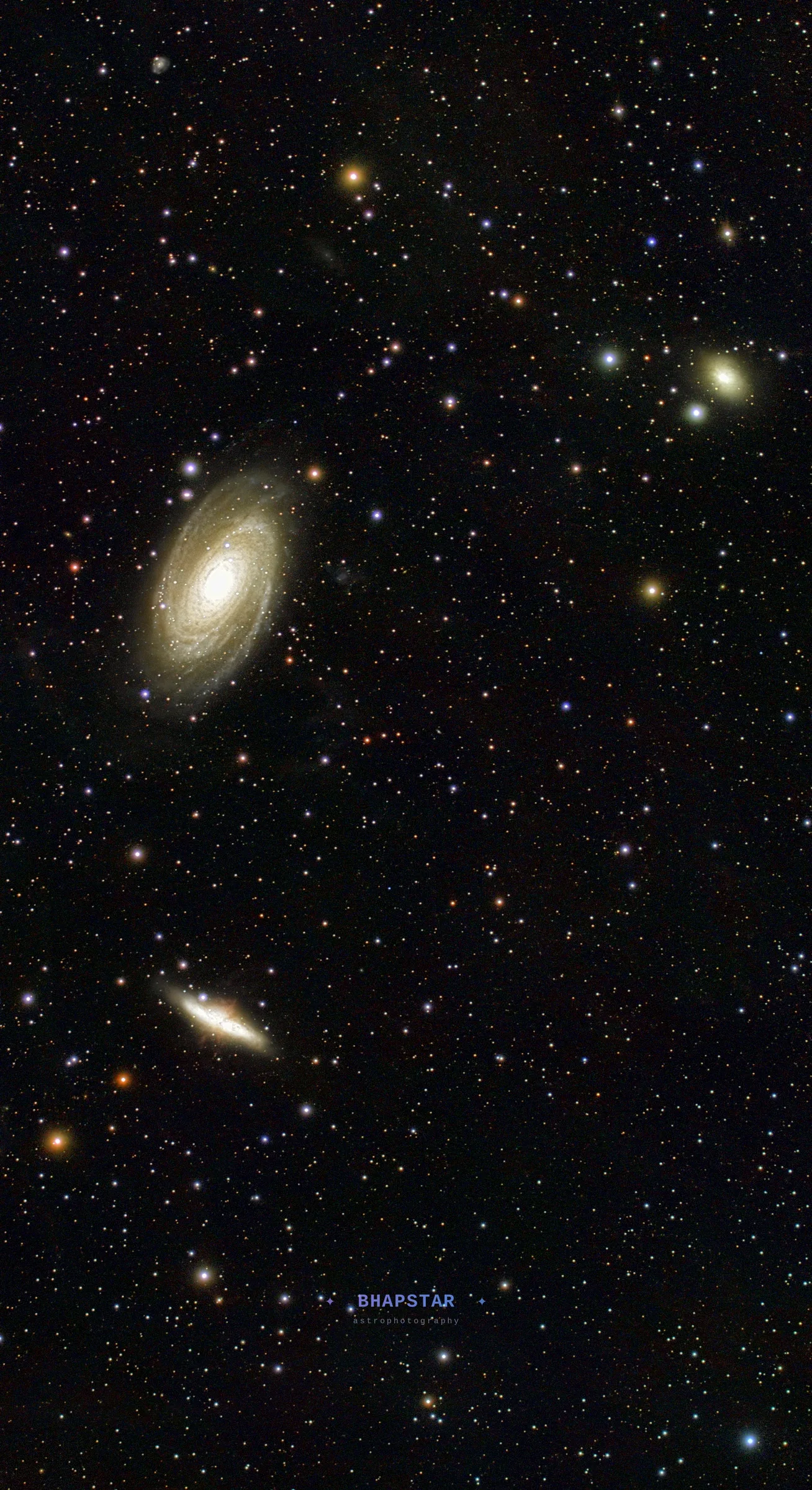
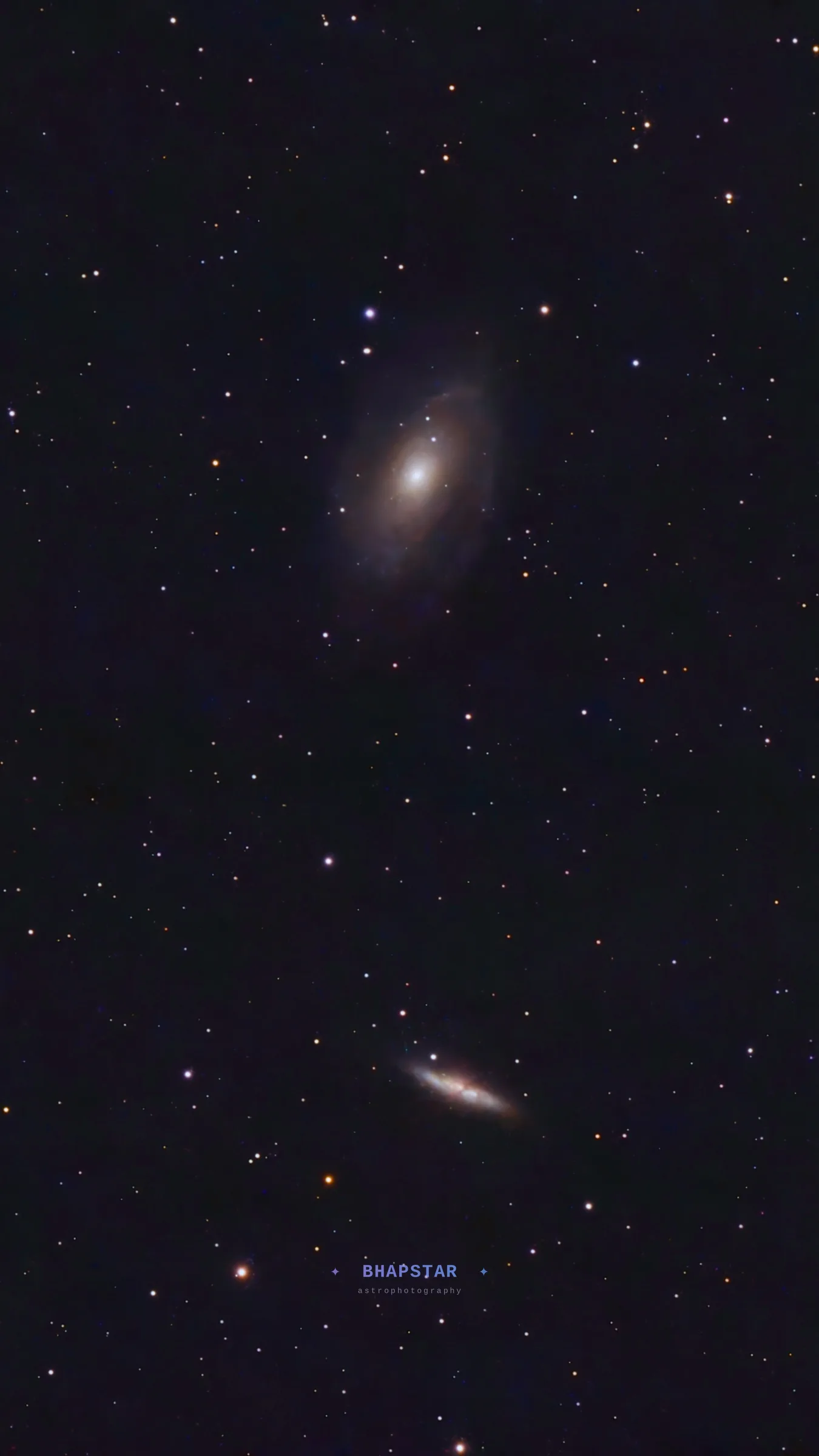
MessierA list of 110 fuzzy objects in the sky, started by the French astronomer Charles Messier in the 1700s so he would not mistake them for comets. M42 means number 42 on his list. 81 and Messier 82 lie around 12 million light-years away in Ursa Major and are among the most studied galaxy pairs in the sky. M81 (Bode's Galaxy) is a large, well-defined spiral whose structure has been distorted by repeated close encounters with its neighbour. M82 (the Cigar Galaxy) shows the more dramatic consequences, a burst of intense star formation triggered by the gravitational interaction, driving enormous plumes of gas and dust out from its plane.
This was a target I came back to, and the two renders in the gallery tell that story. The earlier capture shows what was possible with the equipment and technique at the time. The later revisit, with improved gear and considerably more refined processing, shows how much difference the extra practice made.
The pair sit close enough together on the sky to fit comfortably in a single field at most focal lengths. M82's hydrogen-alphaThe deep red light given off by hydrogen, at a wavelength of 656 nanometres. It is the single most common thing being photographed in a glowing gas cloud. outflow is a detail worth aiming for: glowing red filamentsA thin bright thread running through a nebula. Often it is not a thread at all but a sheet of gas seen edge-on: looking along the fold stacks the same faint material over a much longer path, so it brightens into a line while the face-on parts stay invisible. streaming out at right angles to the galaxy's disk.