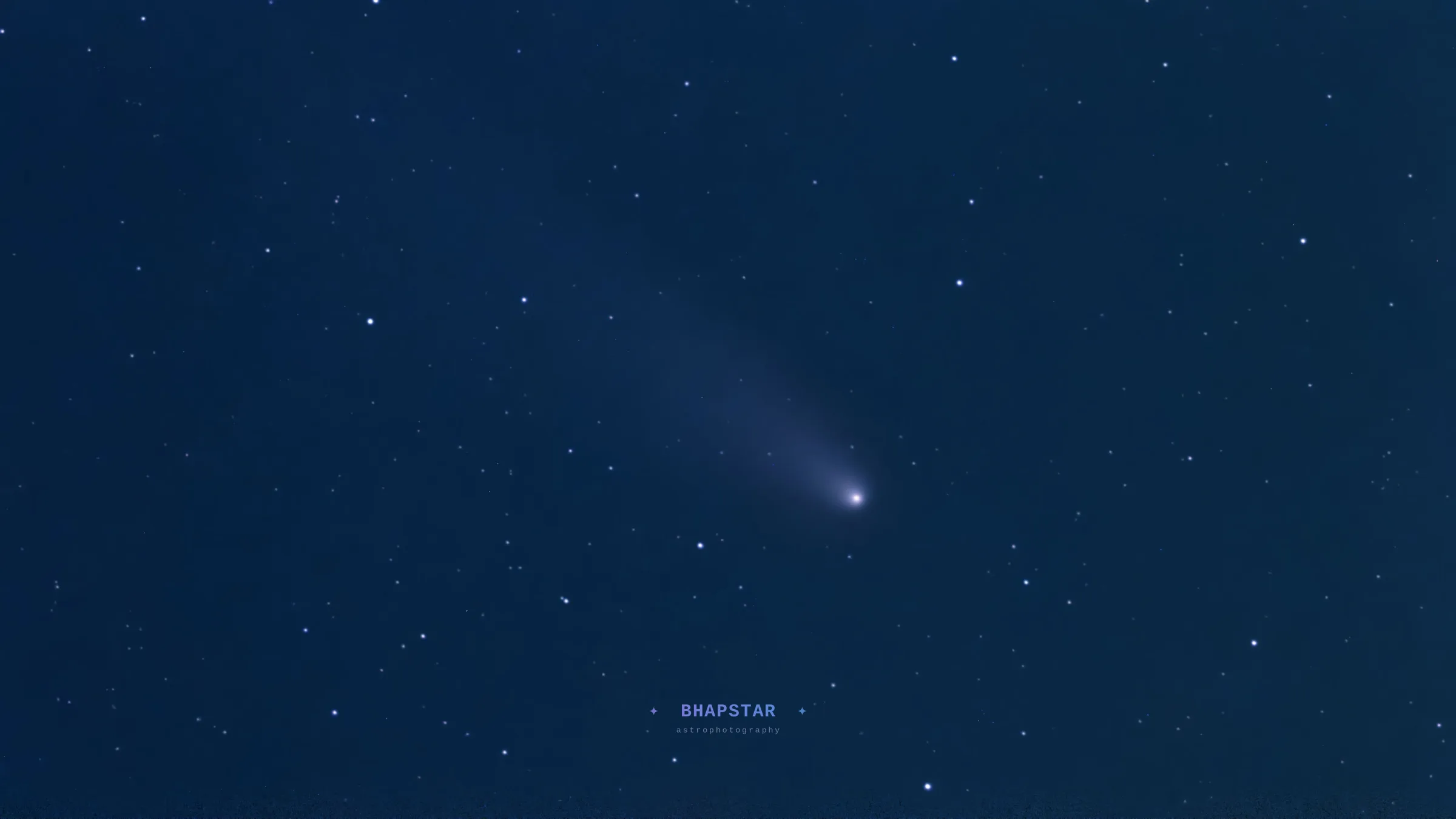
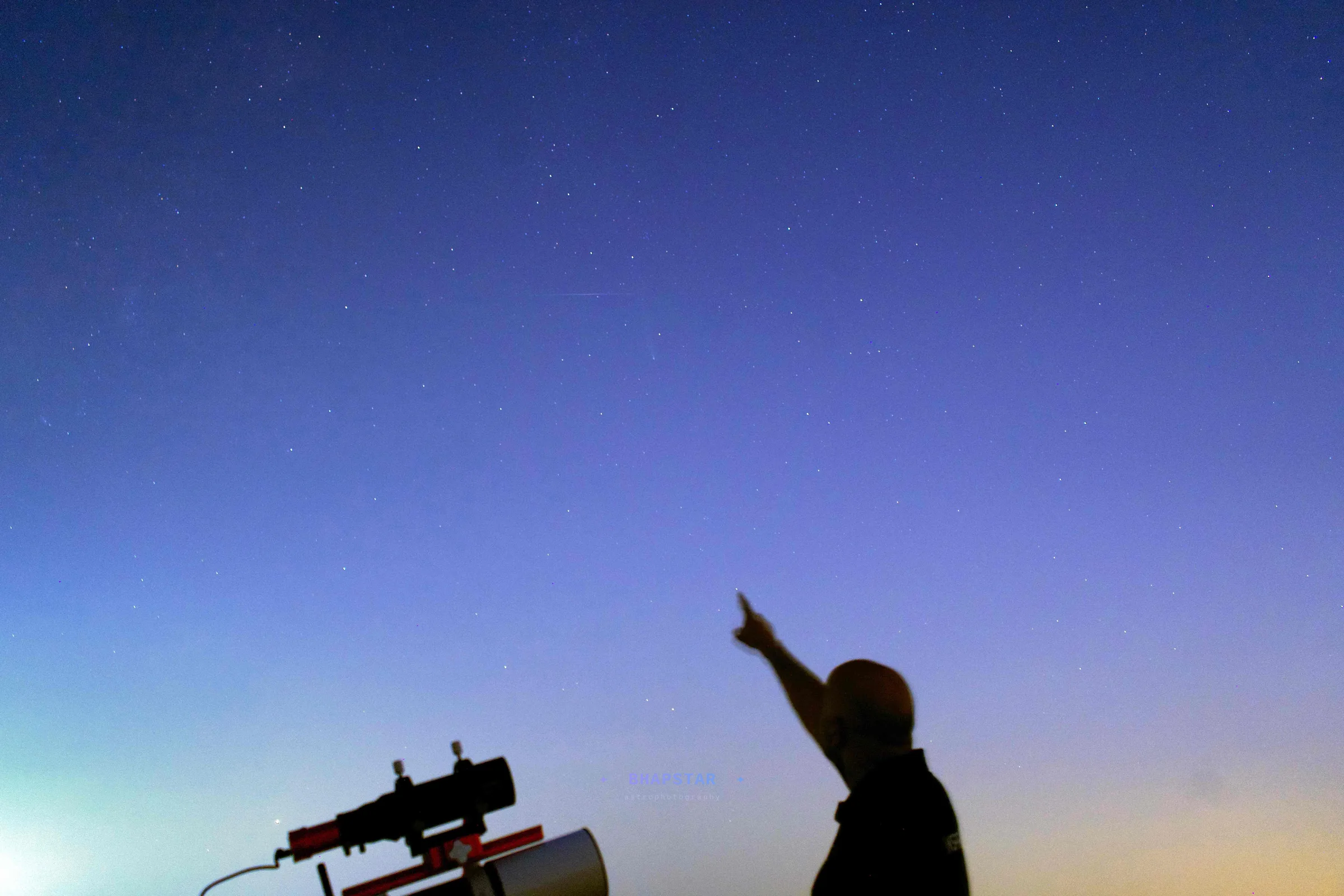
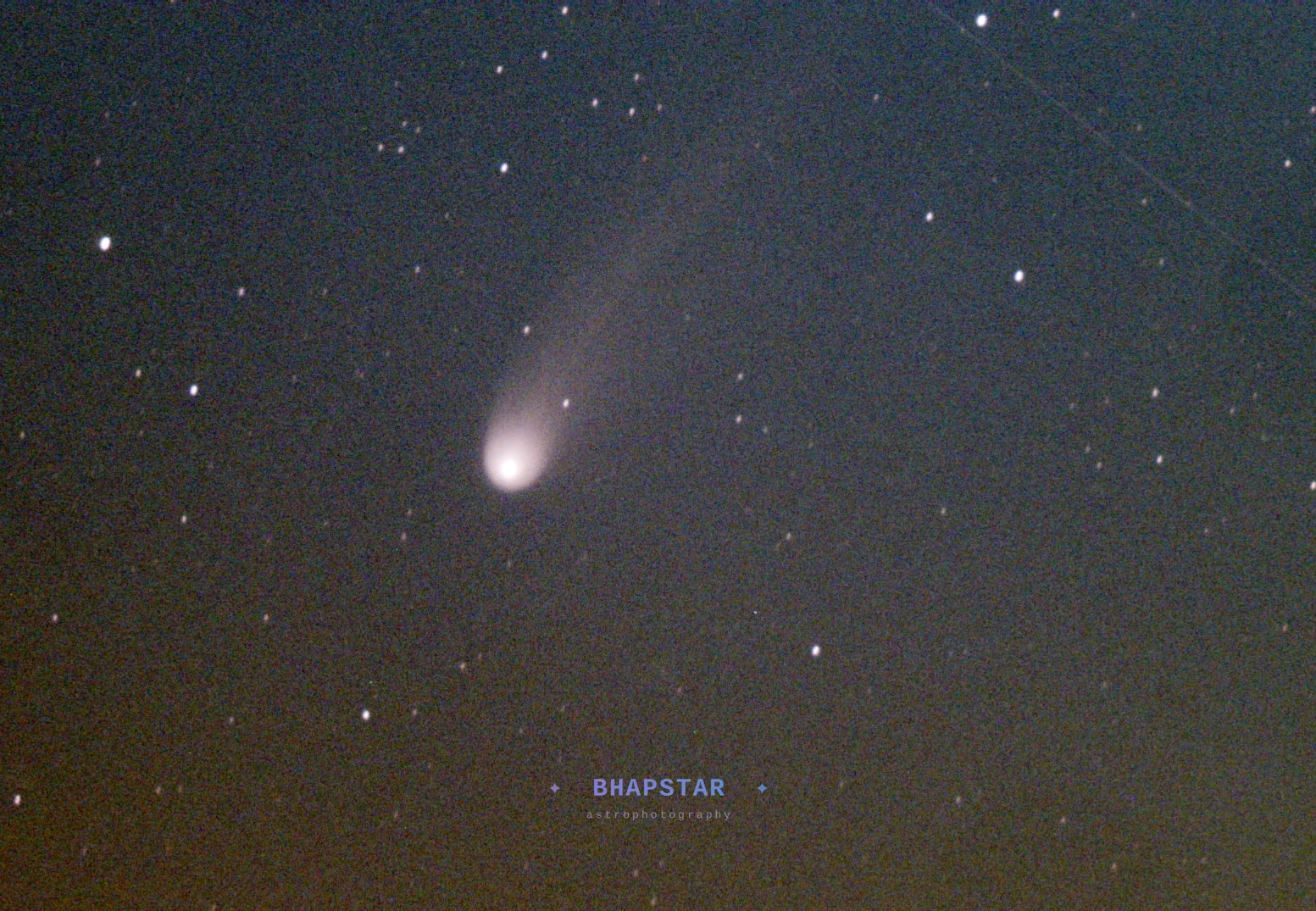
Comets come from the outer Solar System, and no two are alike. Each one changes from night to night as it swings around the Sun.
Comets are ancient bodies, remnants from the formation of the Solar System, kept frozen far out beyond Neptune. When their orbits bring them toward the inner Solar System, the Sun's heat starts turning their ice straight into gas. That gas, and the dust it carries, forms the glowing cloud around the head, called the coma, and the tail that makes comets visible from Earth.
The ion tail always points directly away from the Sun, pushed by the solar wind. The dust tail curves gently behind the comet's path, following its orbit. The two tails often have slightly different colours and structures, and both change on timescales of hours as the comet's activity fluctuates.
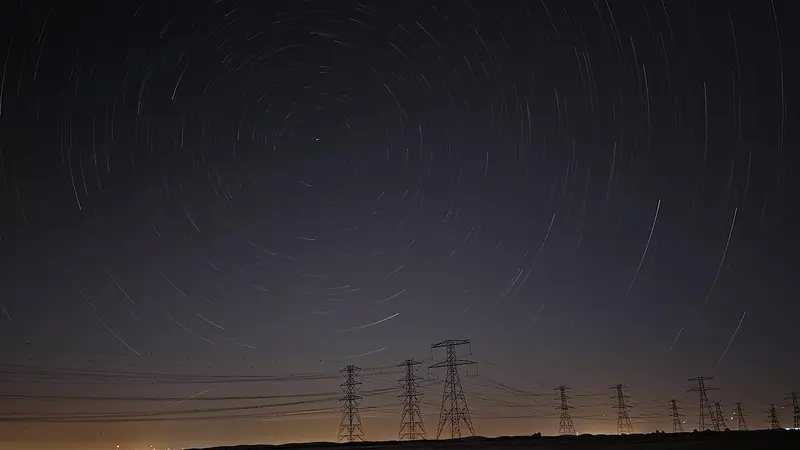
Comets present a unique trackingThe mount turning slowly to cancel out Earth's rotation, so a star stays in the same spot on the sensor instead of drifting into a line. challenge - they move against the background stars, meaning a long exposure will either trail the comet nucleus or trail the stars. Many astrophotographers capture separate exposures tracked on the comet and on the stars, then combine them in processing.