The Geminids are one of the year's most reliable and prolific meteor showers, caused not by a comet but by asteroid 3200 Phaethon, producing fast, bright meteors that radiate from the constellation Gemini.
The Geminids peak each year around the 13th–14th of December and are unusual among major meteor showers in having an asteroid rather than a comet as their parent body. 3200 Phaethon is a rocky object that passes unusually close to the Sun, and the debris trail it has shed over time produces the stream of particles that Earth passes through each December.
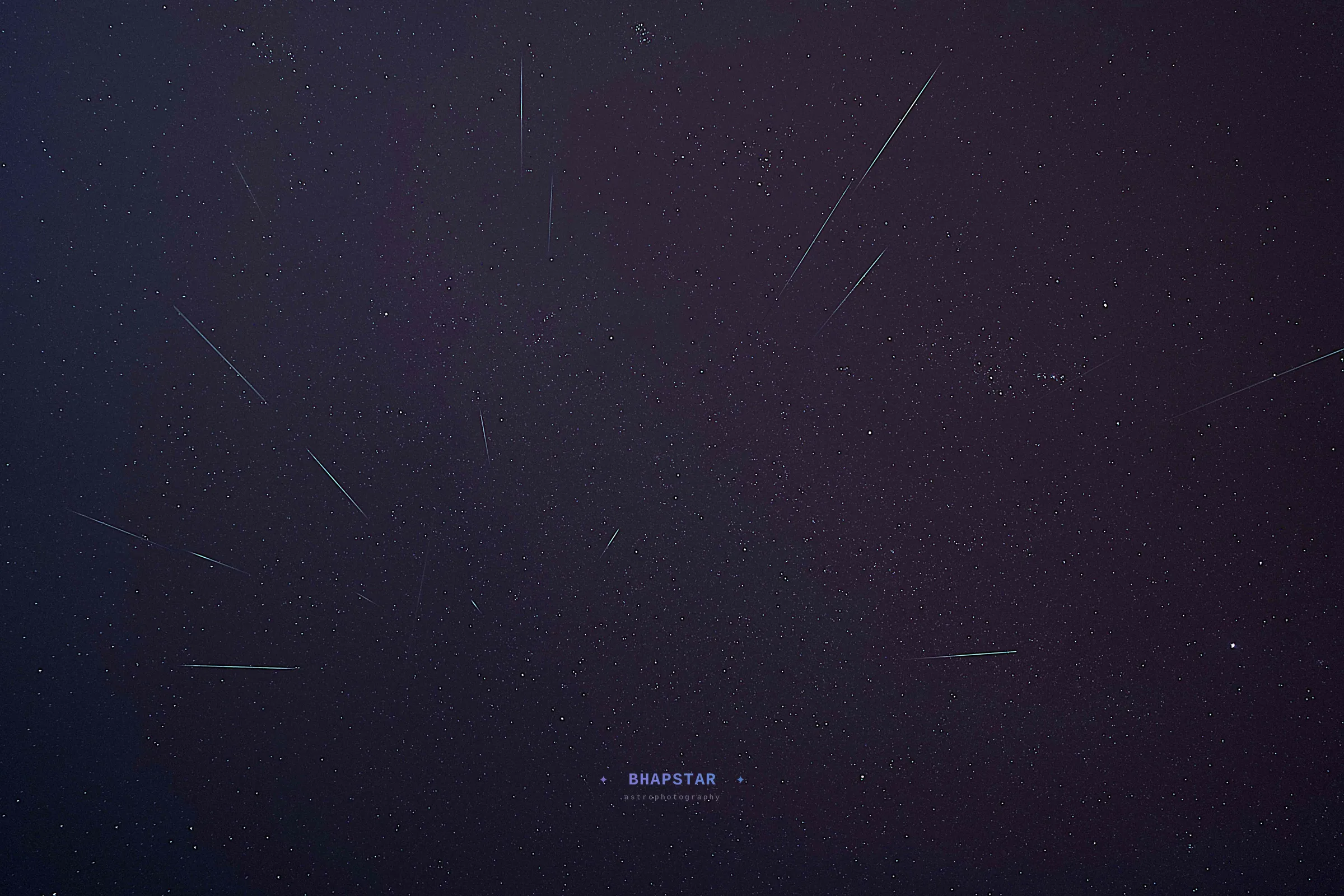
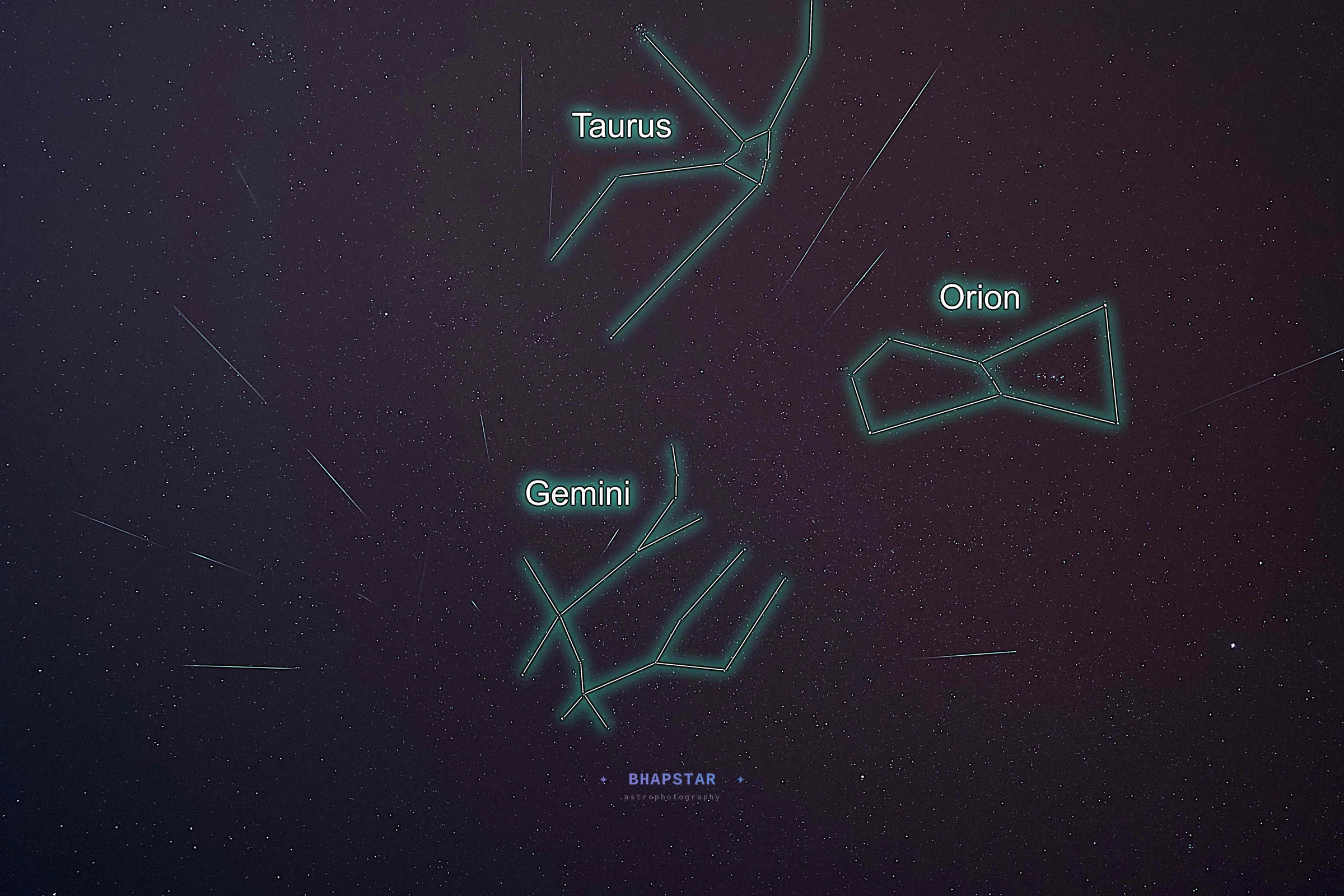
This composite records multiple Geminid meteors captured over a single night, with their trails traced back to the radiantThe point in the sky a meteor shower appears to stream out from. Meteors near it look short, and the ones further away look long. point in Gemini, the apparent origin of the shower as seen from Earth. Individual meteors are captured in single frames; the composite combines them to show the full pattern of the shower's geometry.
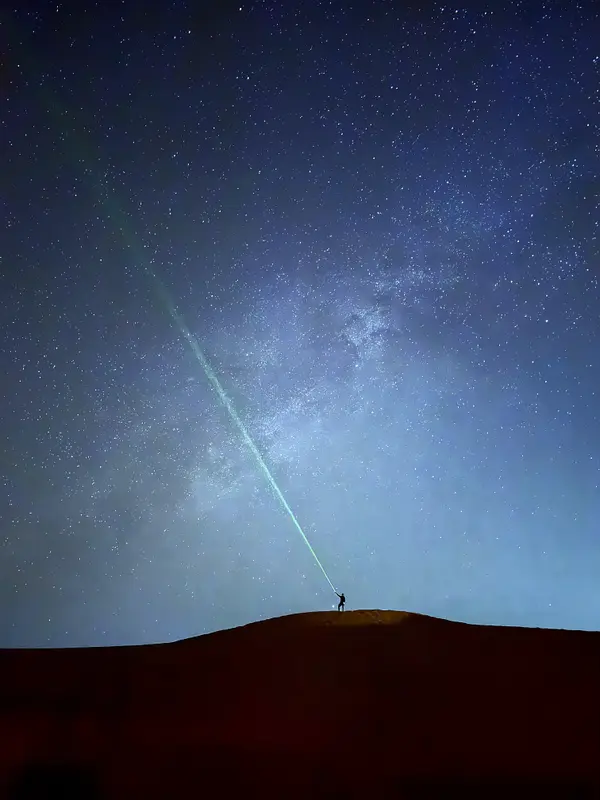
Meteor shower photography is one of the more unpredictable and patience-testing forms of astrophotography - you are essentially leaving the camera running and hoping. The Geminids reward persistence, producing reliably high meteor rates even under imperfect conditions.