The Little Beehive Cluster (M41)
M41 is a loose open clusterA loose group of a few dozen to a few thousand young stars that were born together from the same cloud. Over millions of years they slowly drift apart. in Canis Major, easily visible to the naked eye, its scattered stars giving it a warm, open appearance against the winter Milky Way.

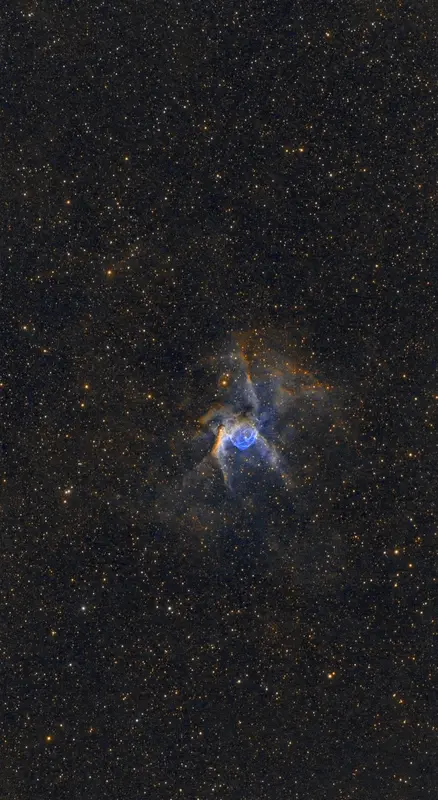
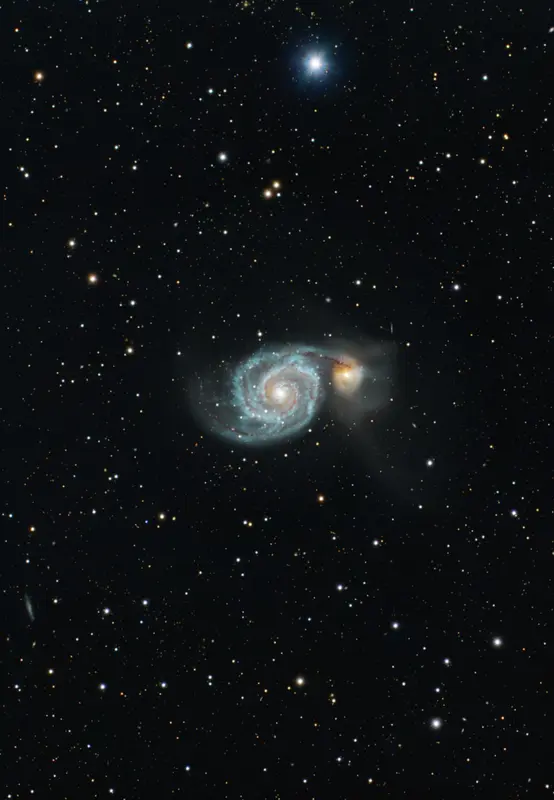
MessierA list of 110 fuzzy objects in the sky, started by the French astronomer Charles Messier in the 1700s so he would not mistake them for comets. M42 means number 42 on his list. 41 lies around 2,300 light-years away in Canis Major, sitting just 4 degrees south of Sirius, the brightest star in the night sky. It contains around 100 stars spread across a region about 25 light-years across, with a notable orange giant near its centre that gives the cluster a warm, multicoloured character.
Open clusters like M41 are young by cosmic standards - typically only tens or hundreds of millions of years old, not yet dispersed by the gravitational interactions that gradually pull these stellar families apart over time.
The proximity of Sirius requires careful framing to keep it outside the field, or at least to manage its glare and diffraction spikesStraight lines of light that stick out from bright stars in some pictures. They come from something in the light path bending the light, such as the supports that hold a telescope's mirror, not from the star itself. if it does creep in. The rich background of Milky Way stars adds texture and depth to the wider field around the cluster.