Angeleyes CF-60 Carbon Fibre Tripod
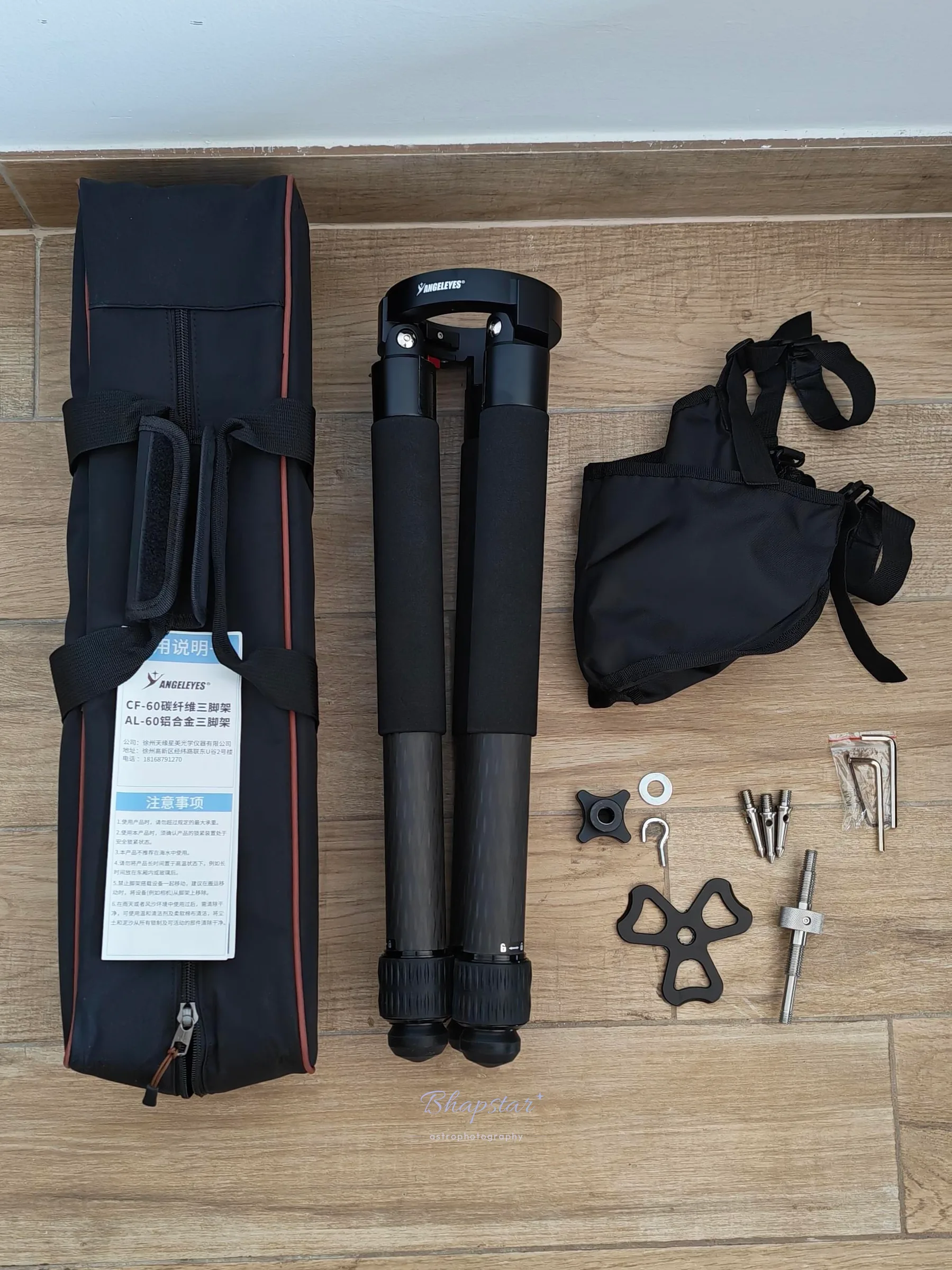
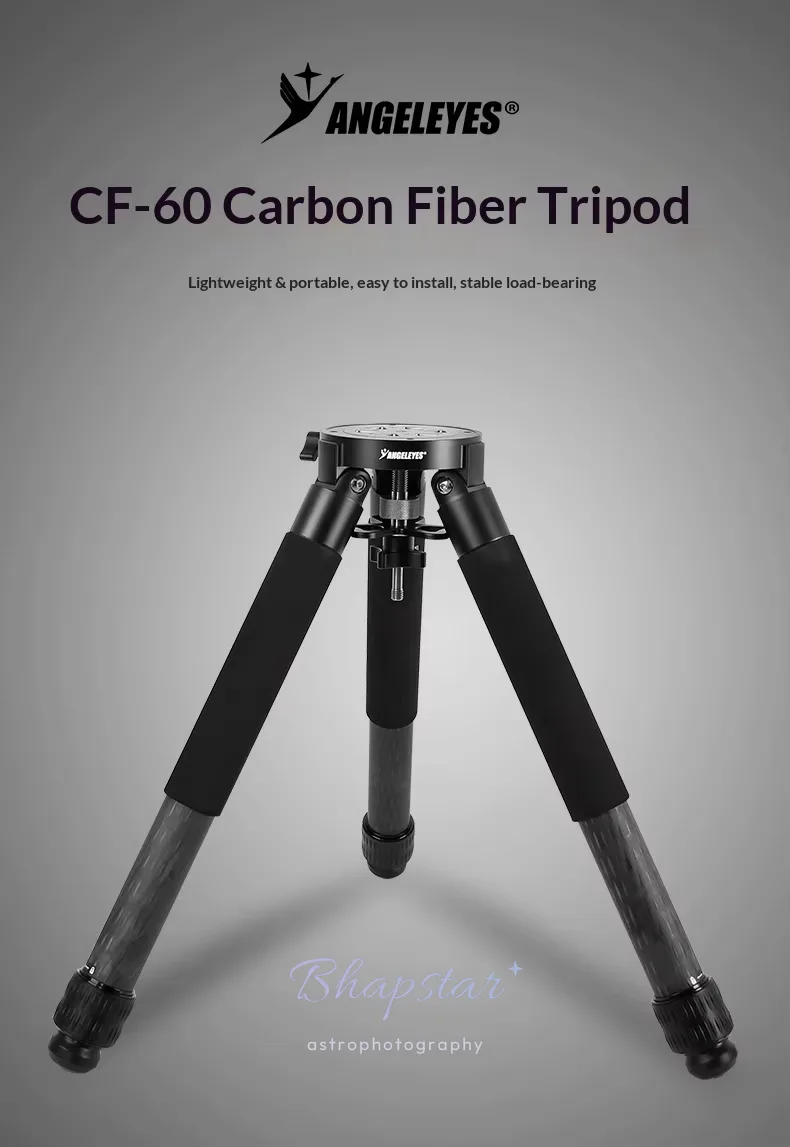
A short, stiff carbon fibre tripod built for equatorial mountsA mount with one axis tilted to line up with Earth's own axis. Once it is aligned, tracking the sky is one steady turn on that axis at a single constant rate. It still has a second motor for the other axis, but that one is for pointing and small guiding corrections rather than for keeping up with the stars, and the framing never rotates during an exposure. rather than cameras. Two leg sections instead of three, 40.4mm tubes and a triangular centre brace, with a flat drilled plate on top for a mount head to bolt straight down onto.
Why a tripod deserves its own page
A tripod is bought last and blamed never. GuidingA second small camera watches one star and sends tiny corrections to the mount, keeping the target locked in place over long exposures. corrects the mount, not the thing the mount is standing on, so a support that flexes turns every gust into trailed stars and no amount of software rescues it. If the ground is moving, the image is moving.
The CF-60 is Angeleyes' carbon fibre tripod aimed at equatorial mounts rather than cameras. That distinction matters more than it sounds. A camera tripod is built to hold a few kilos and let you swing it around smoothly. A mount tripod is built to hold a lot of weight completely still and never move again, which is a different problem with different answers.
The build
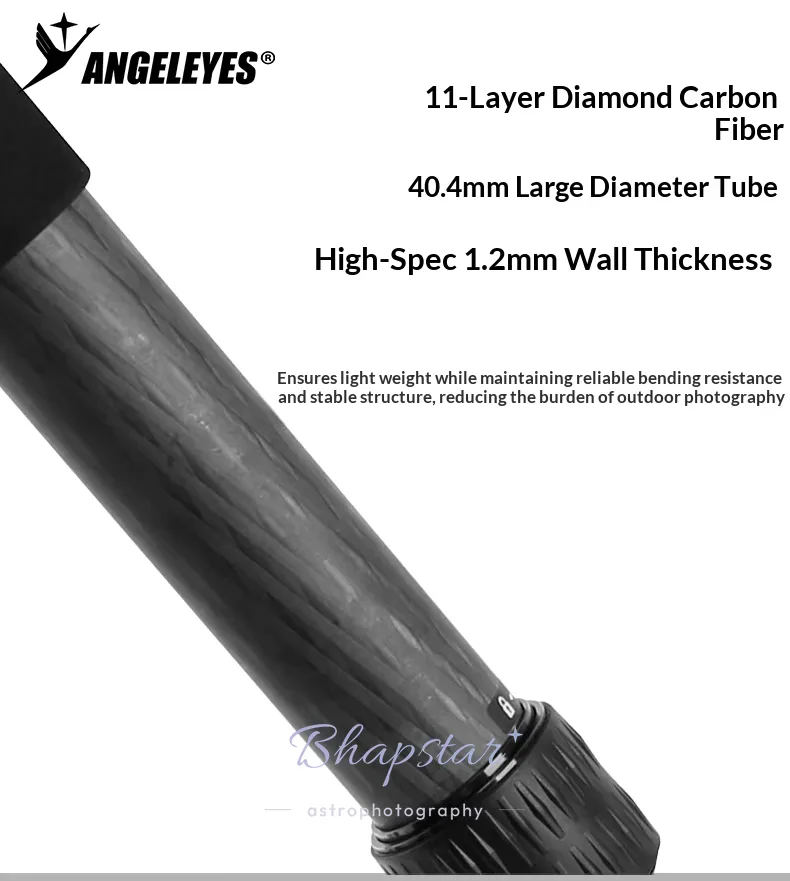
The legs are 40.4mm carbon fibre tube with a 1.2mm wall, in eleven layers. Diameter is doing most of the work there: stiffness against bending rises very steeply with tube diameter, far faster than with wall thickness, so a fat thin-walled tube beats a narrow thick-walled one at the same weight. 40mm is genuinely large for a tripod leg. Foam grips cover the upper section, which is there for your hands in winter rather than for the physics.
Two sections rather than three. Every joint in a leg is a place stiffness goes to die, so fewer sections is stiffer for the same height, at the cost of a longer folded package. The trade is the right way round for a mount tripod, where you are carrying it from a car to a patch of ground rather than strapping it to a rucksack.
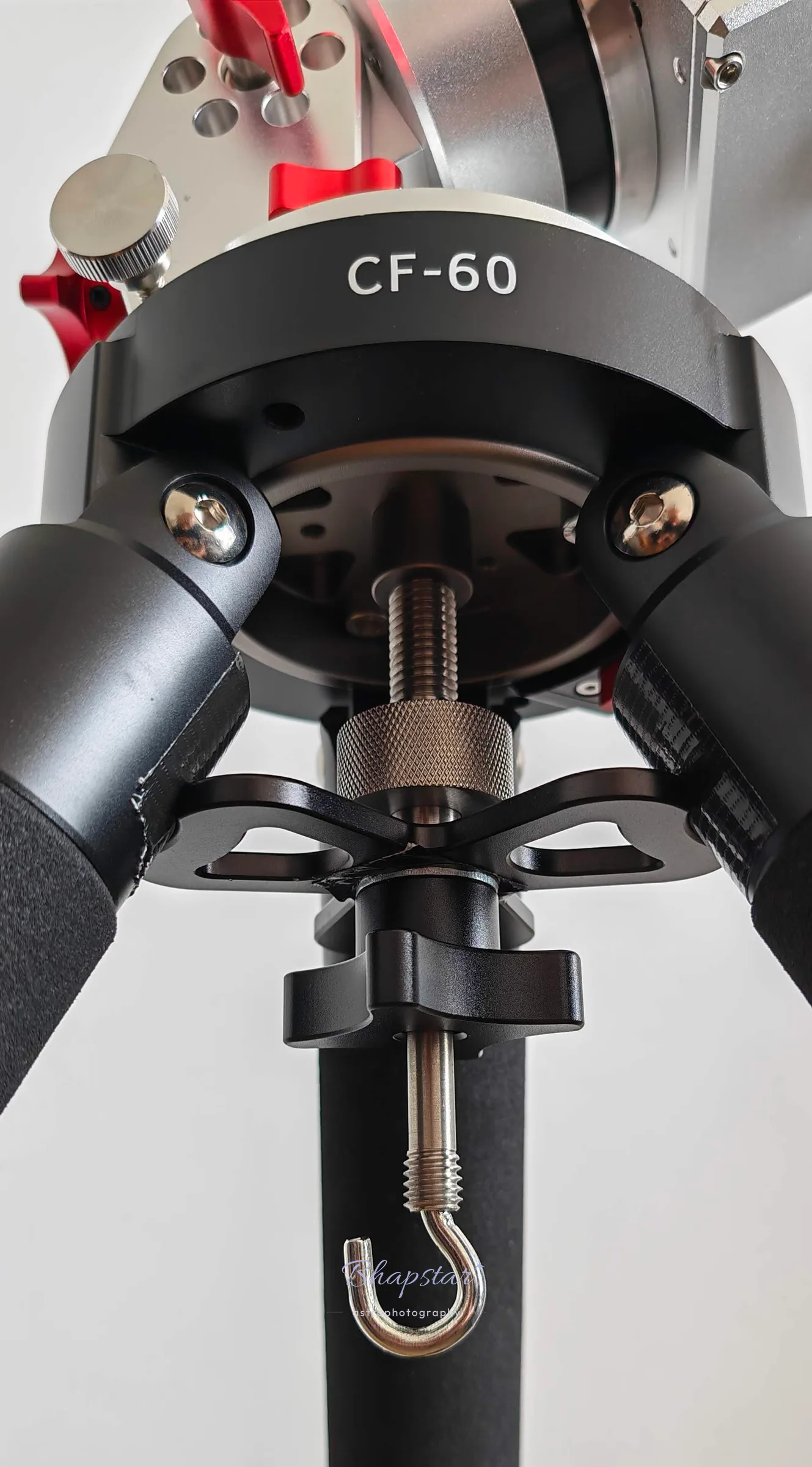
There is a triangular brace at the centre column rather than a spreader down at the feet. It clamps the three legs against each other near the apex, where the leverage is, and it is the part that turns three separate legs into one structure. The feet are rubber balls, and a set of screw-in grass spikes comes in the box for soft ground.
The top
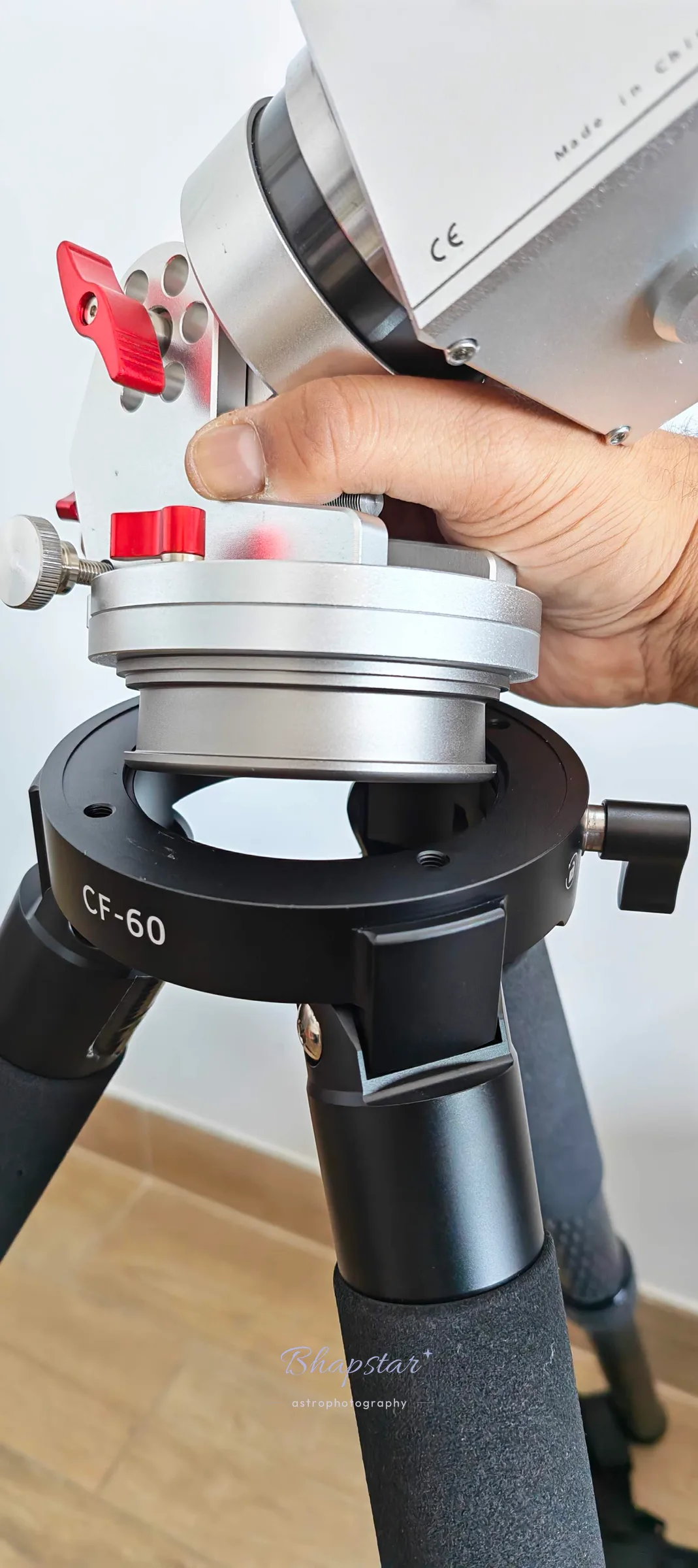
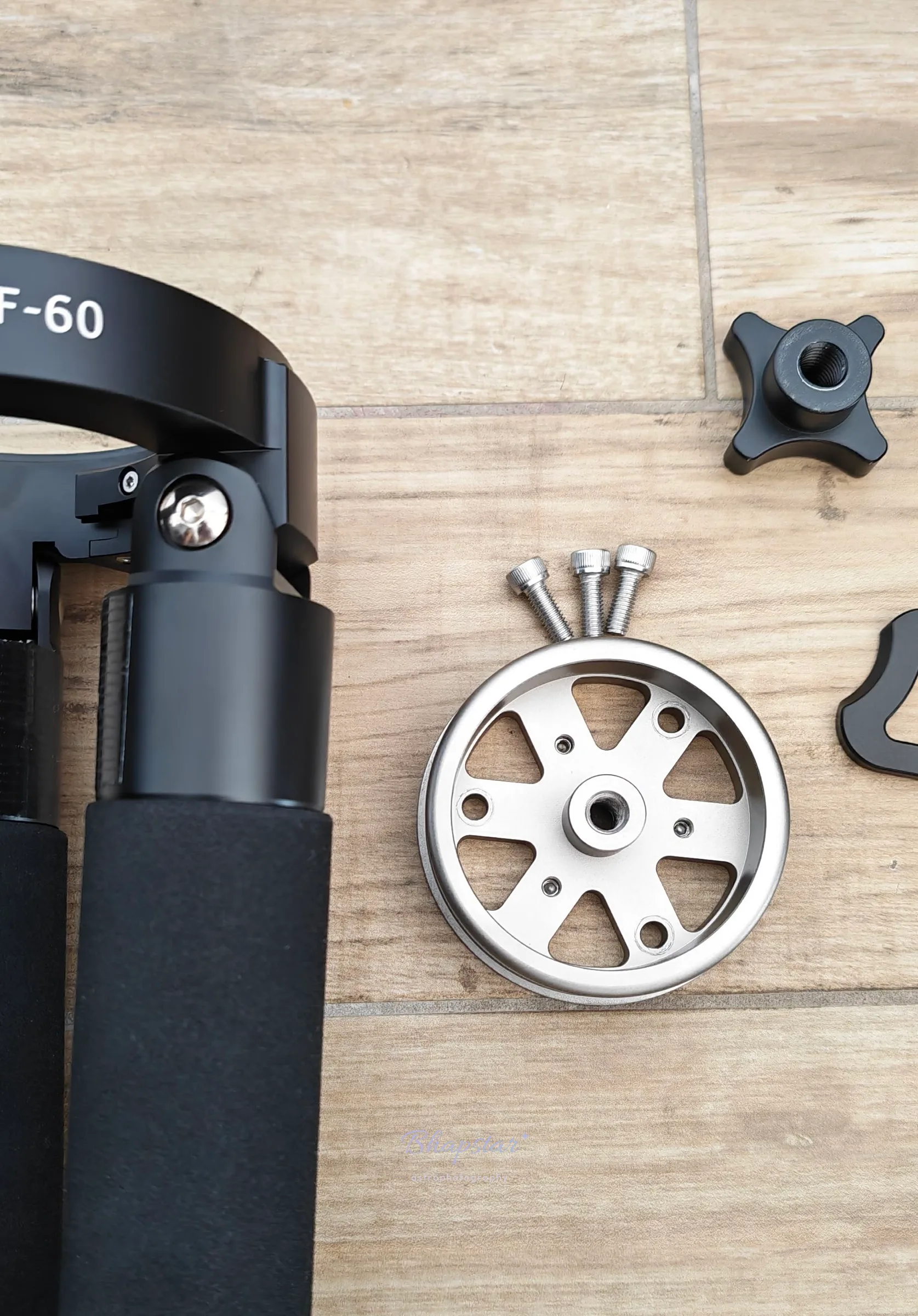
The head is a flat plate drilled for mount bolts, not a ball head or a photographic screw. That is the tell that this is built for an equatorial head to bolt directly down onto, with the central threaded rod pulling it tight from underneath. Check the bolt pattern against your own mount before ordering, because this is the part that varies between manufacturers and the part that is hardest to adapt after the fact.
What the numbers actually say
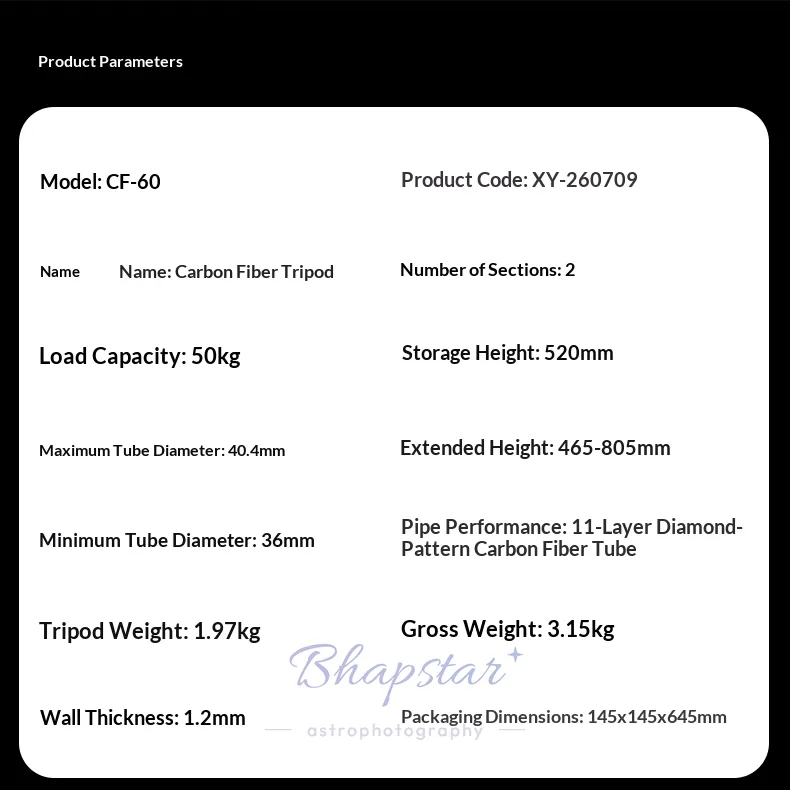
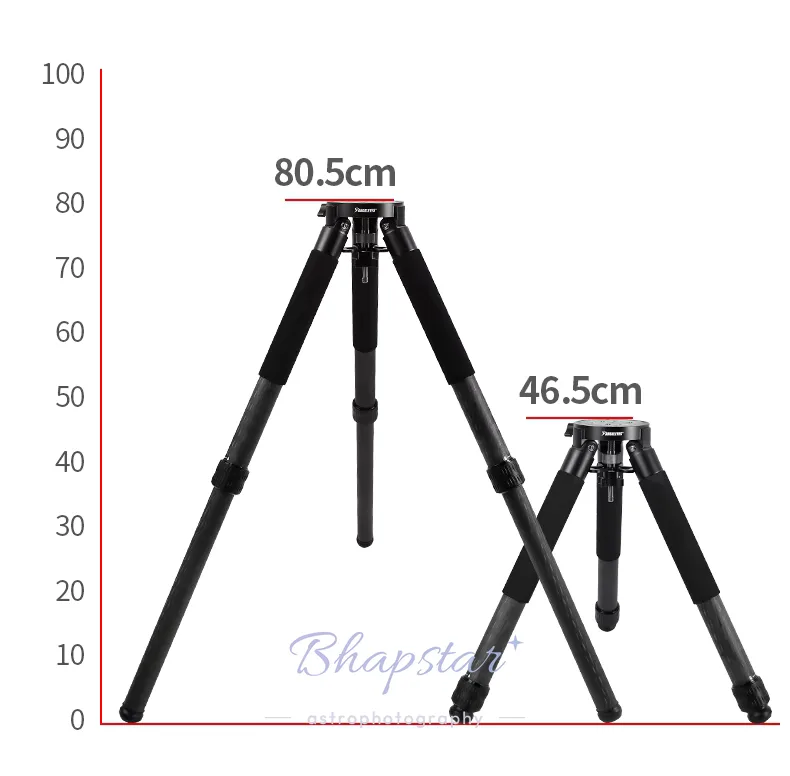
Worth flagging a discrepancy, because it is the sort of thing that decides whether a tripod suits you. Angeleyes' own dimensioned diagram shows a height range of 46.5cm folded to 80.5cm extended. The retail listing text quotes 460mm to 770mm. The two disagree at the top end by about 3.5cm.
Either way, the important point is the same and it is easy to miss: this is a short tripod. 80cm puts the top plate somewhere around hip height, before you add the mount and the telescope on top. That is deliberate. A low tripod is a stiff tripod, and for imaging you are looking at a screen rather than through an eyepieceThe small lens you put your eye to at the back of a telescope. Swapping it for another one changes how much bigger everything looks., so eye height is irrelevant. If you also observe visually, this will have you kneeling.
The quoted load rating is 50kg. Treat every tripod load rating from every manufacturer as a structural figure rather than an imaging one: it tells you roughly what it will hold without failing, and nothing at all about what it will hold still. The number that matters is how quickly vibration dies away under your own payloadThe weight a mount is built to carry. Loading one near its limit works, but everything about it behaves worse than it does at half., and no manufacturer publishes it because it depends on the mount, the telescope and the ground.
What I actually put on it
Payload, adapter, settle time and a comparison against the TC20 to follow, once they have been measured properly rather than estimated.
Judging a tripod
If you are weighing this against anything else, the test is the same for all of them and takes ten seconds. Set the rig up, start a two or three second exposure, tap one leg, and watch how long the stars take to settle. Under two seconds is good. Four or more and you will lose subsOne single exposure out of the many that get stacked together. Sixty subs of one minute each make one hour of data. to nothing more than the wind picking up.
Everything else follows from that. Carbon fibre helps because it damps vibration rather than ringing the way aluminium does. Large diameter tubes help because they resist bending. Fewer leg sections help because every joint is a hinge. Low height helps because leverage works against you. The CF-60 is built around all four of those, which is a sensible set of choices for a mount tripod even before anyone measures it.