EcoFlow River 2 Power Station
256Wh of lithium iron phosphateA battery chemistry that lasts for far more charges than ordinary lithium-ion and copes much better with heat. Heavier for the same capacity, which matters less on the ground. in a box the size of a shoebox, running the entire rig from its 12V car socket. A 300W AC outlet, a 12.6V DC output rated to 100W, and a measured eleven-watt draw that turns a night's power into something you stop thinking about.
Why a power station and not a battery pack
Every part of the rig runs on power that has to come from somewhere, and in the desert there is nothing to plug into. A USB power bank will run a camera, but it will not run a mount, and mixing three different supplies across a rig is how you end up chasing a fault at two in the morning.
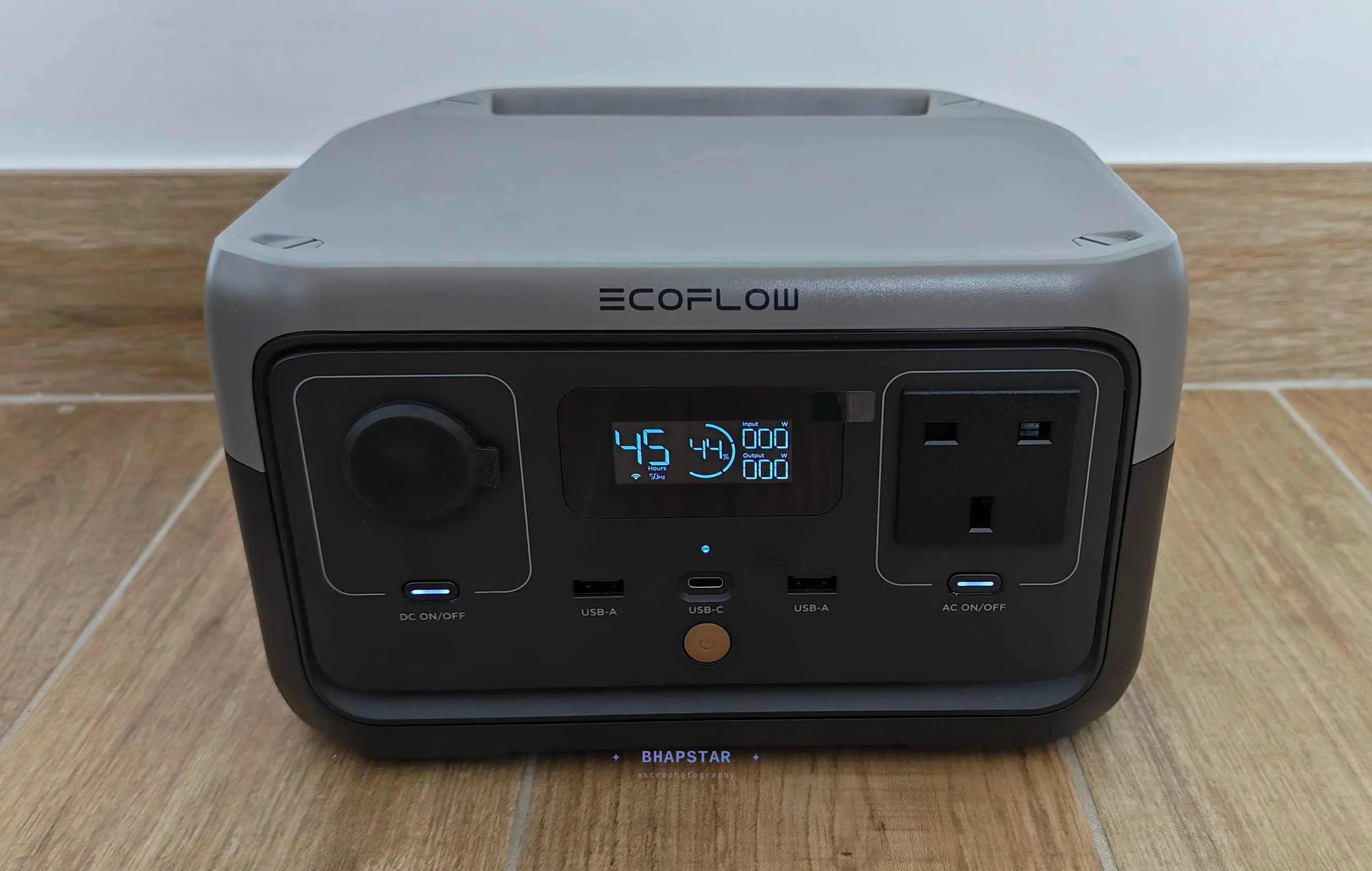
The River 2 is the smallest unit that solves the whole problem at once. 256Wh of lithium iron phosphate, a 300W AC outlet with a 600W X-Boost surge, a 60W USB-C port that works in both directions, two USB-A ports at 12W each, and a 12.6V car socket rated to 100W. Everything on a normal night draws from one box.
What it actually powers, and for how long
The whole rig runs off the 12V car socket on the front of the unit. A 12V DC lead is what the mount and the camera want, so nothing has to be stepped up through USB and back down again. Bench-tested with everything live, the Juwei 14 trackingThe mount turning slowly to cancel out Earth's rotation, so a star stays in the same spot on the sensor instead of drifting into a line. and the ASI585MC Air cooling, imaging and running its own controller, the total draw settled at around 11 watts.
Against 256Wh that is a long night with a wide margin. Real capacity is never the number on the box once you account for conversion losses, and cooling pulls harder as ambient temperature climbs, so the honest figure is somewhere between sixteen and twenty hours rather than a single clean number. Either way it comfortably outlasts me, and it outlasts the dark.
LiFePO4, and why it matters here
The cells are lithium iron phosphate rather than standard lithium-ion. Two practical consequences. It is rated to 3000 cycles with more than 80% of its capacity intact, which for something used a few nights a month is effectively its whole service life. And LFP chemistry is markedly more tolerant of heat than li-ion, which is not an abstract virtue when the unit is sitting on sand that was at fifty degrees a few hours earlier.
Recharging is fast enough not to plan around. Zero to full on mains takes roughly an hour, so it goes on charge when I get home and is ready before the gear is unpacked.
In the field
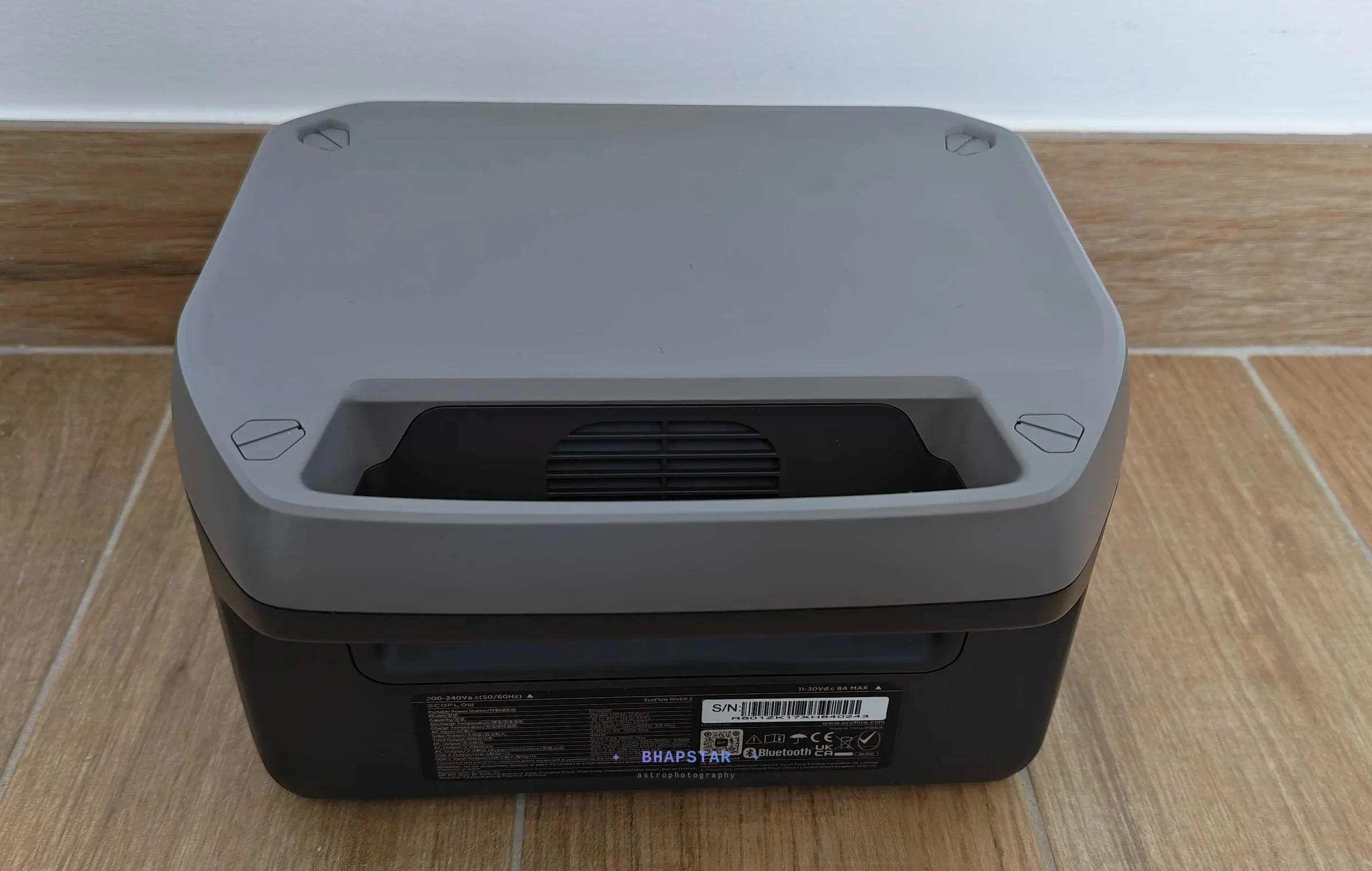
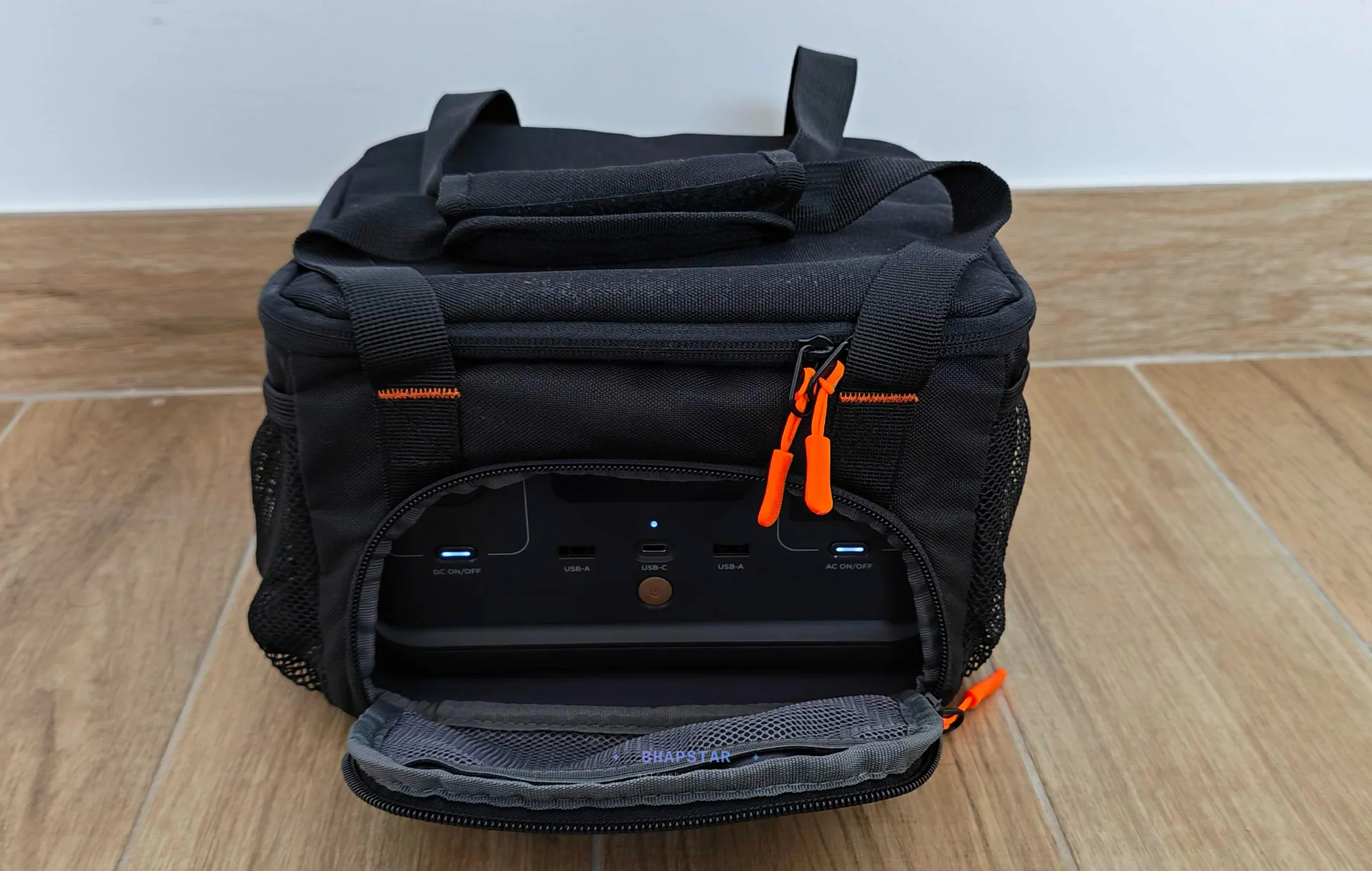
At 3.5kg and roughly the size of a shoebox it lives in the boot without argument, and it has a proper handle rather than a strap. The display tells you watts in, watts out and time remaining, which is more useful than a percentage when you are deciding whether to run another hour.
The app connects over WiFi or Bluetooth and will report the same figures from inside a warm car. Setting the AC standby timeout is worth doing before your first night out, because the default behaviour of shutting the inverterThe part of a power station that turns its battery power into mains power for a normal plug. It uses some power itself just by being switched on. down on low load is sensible for camping and a nuisance if you are running something small off the AC socket.
Where it falls short
One AC outlet, one USB-C port and one car socket is the real constraint. It is sized for one rig. If a second setup joins the first, or a laptop wants to sit outside all night as well, the ports run out before the watt-hours do, and the answer is either a hub off the DC socket or the River 2 Max with its larger capacity.
The fan is audible when the inverter is under load. Nobody cares in a desert, but it is worth knowing if you image from a garden with neighbours.
Where to buy
Some links above are affiliate links. If you buy through them I may earn a small commission, at no extra cost to you. It does not affect which gear I use or recommend. As an Amazon Associate I earn from qualifying purchases.