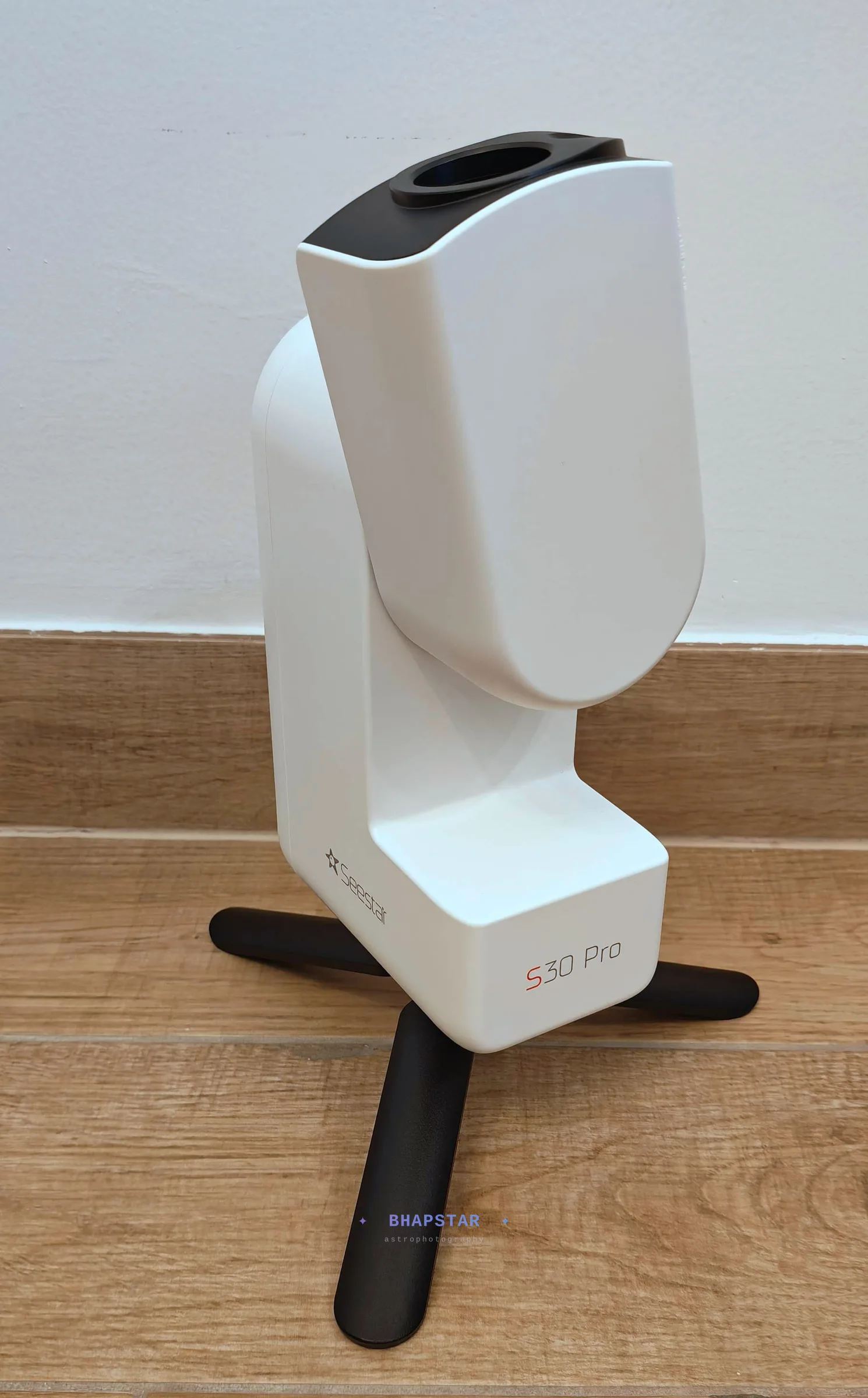
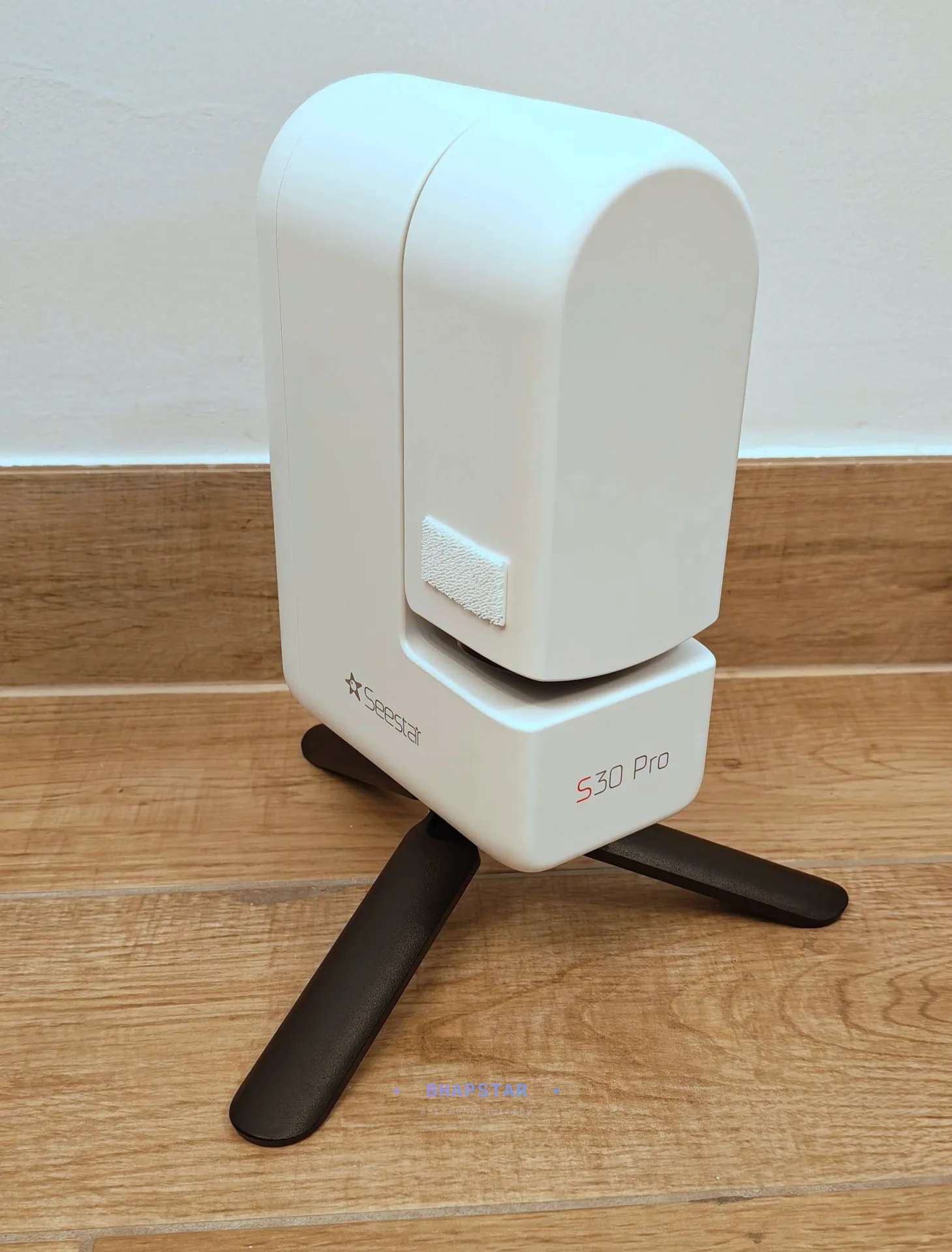
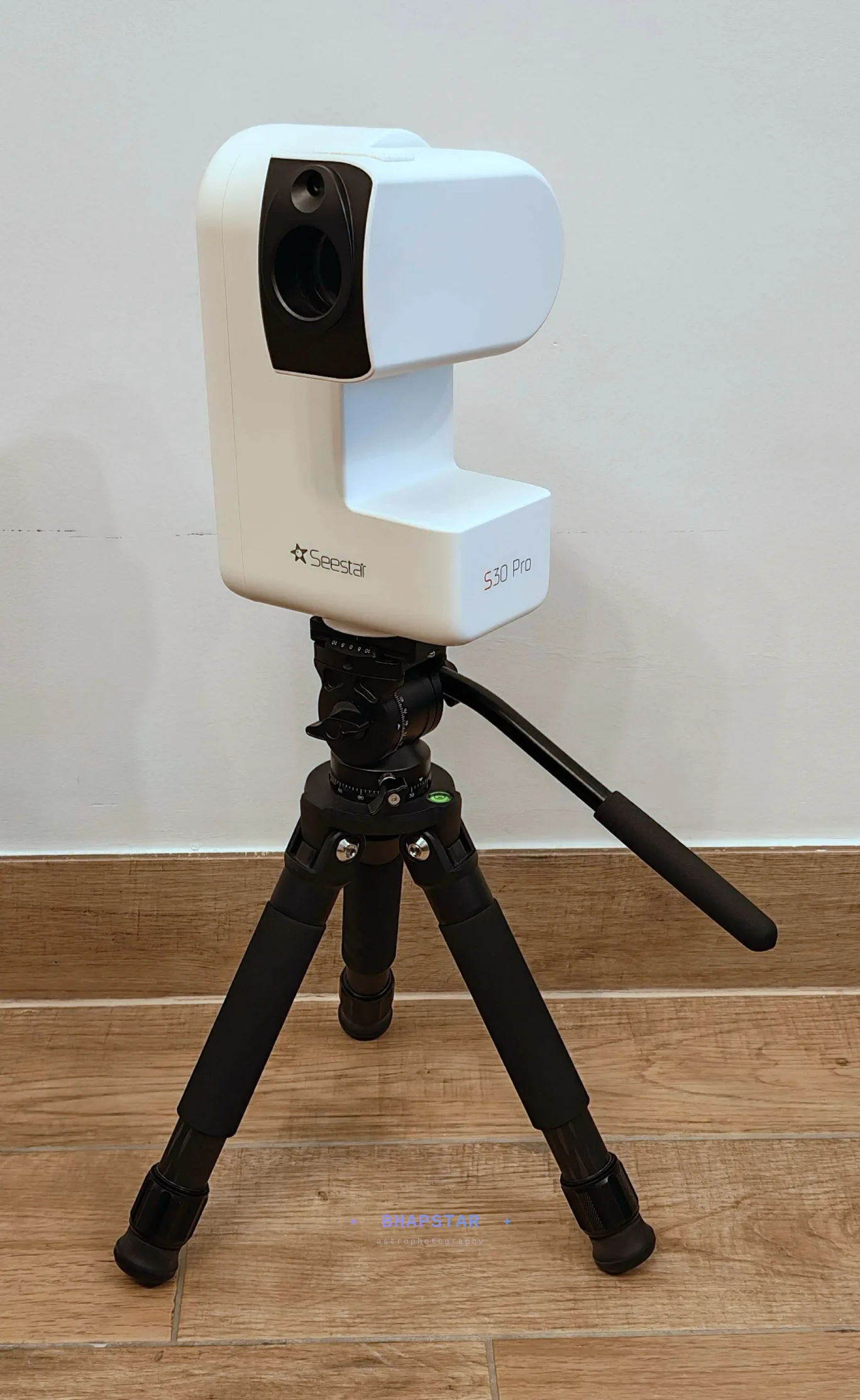
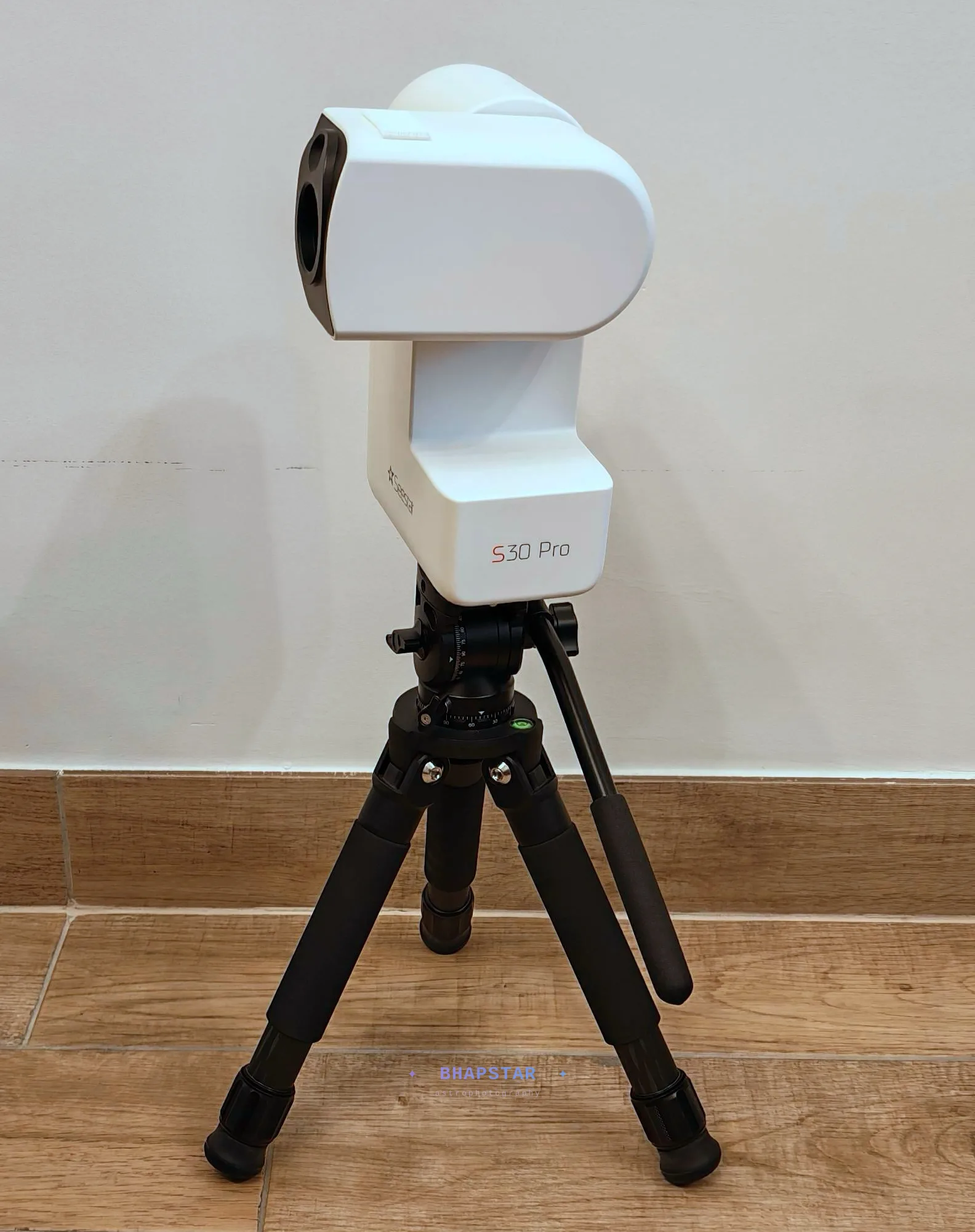
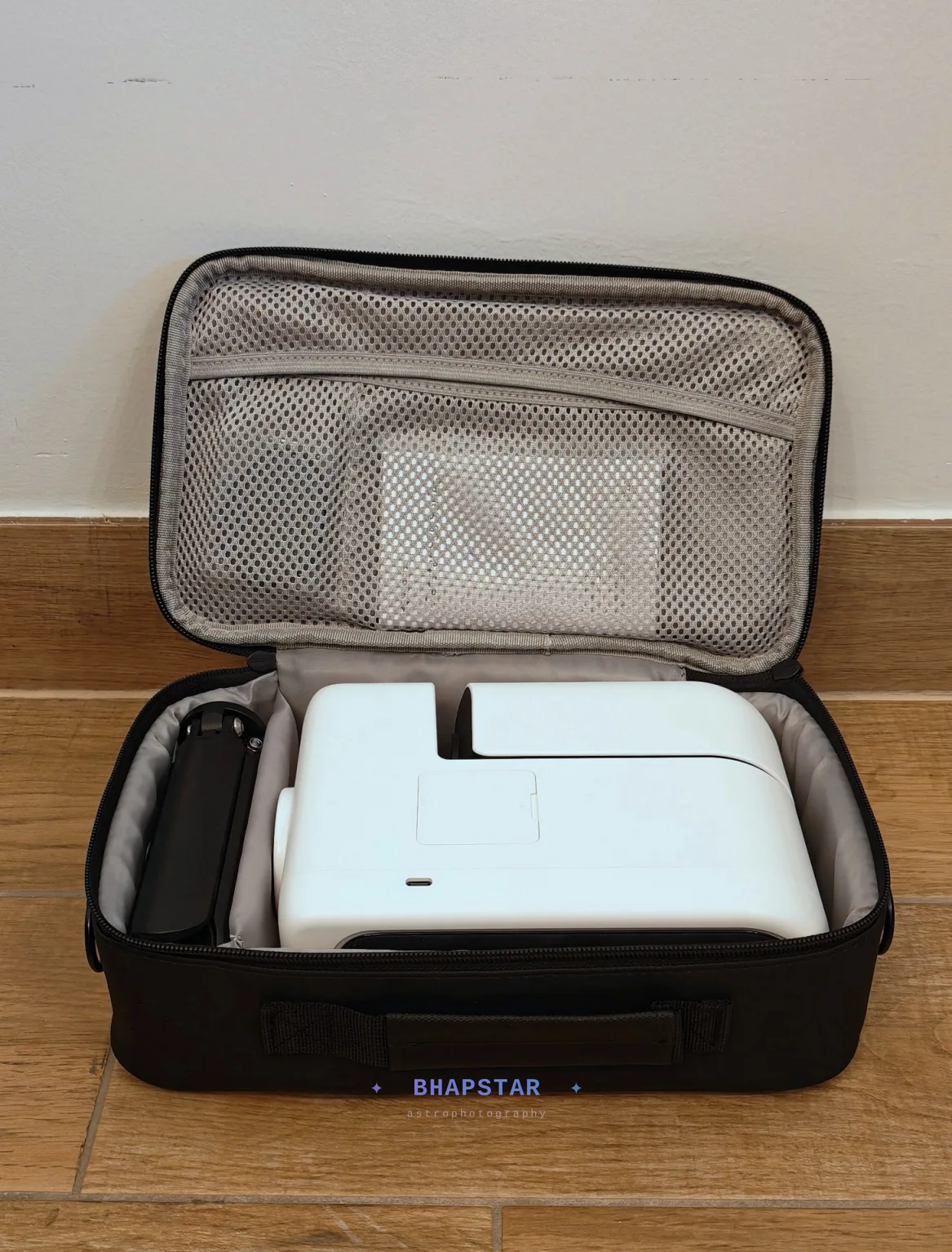
ZWO Seestar S30 Pro Smart Telescope
Keeps the S30's 30mm apertureThe size of the opening the light comes through, written as an f number such as f/2.8. Confusingly, a smaller f number means a bigger opening and more light. but moves to an 8.3MP IMX585 behind a 160mm f/5.3 quadruplet, and adds a wide-angle camera for Milky Way and star-trail work. More resolution and more coverage, not more light.
Same aperture, different instrument
The headline number has not moved. Both the S30 and the S30 Pro have a 30mm aperture, so the Pro collects no more light than the original. Anyone expecting to reach fainter targets because of the name will be disappointed.
Everything behind the aperture has changed. The Pro uses an 8.3 megapixel IMX585 in place of the S30's 2.1 megapixel IMX662, on a 1/1.2 inch format rather than 1/2.8 inch, behind a four-element apochromatA lens design that brings the red, green and blue parts of light to the same point of focus. Without it, bright stars pick up a purple halo. at 160mm f/5.3 instead of the tripletA lens made of three pieces of glass. More expensive, but it brings the colours together more completely than a doublet. at 150mm f/5. A second wide-angle camera is what makes the Milky Way and star-trail modes possible.
What four times the pixels actually buys
Less than it sounds, and more than you would think. The larger sensor is paired with a proportionally longer focal lengthHow much a lens or telescope magnifies, measured in millimetres. A small number gives a wide view of the sky, a large number a narrow, closer one., so the angular size of a pixel barely changes: the Pro works out around 3.7 arcsecondsA very small angle, one 3600th of a degree. The full Moon is about 1800 arcseconds across. per pixel, coarse either way.
What you gain is coverage. The Pro's telephoto field is roughly 2.2 by 4 degrees, which fits targets in one frame that the S30 has to crop or mosaicSeveral overlapping frames joined together into one much wider picture, for targets too big to fit in a single view.. The wide-angle camera is a separate matter again: this Milky Way frame from Al Quaa is its work, and is not something the original S30 could attempt at all.
The rest of the changes
Battery life roughly doubles, from about three and a half hours to around six, which on a full night is the difference between one session and two. Storage goes from 64GB to 128GB, which matters because 4K files are much larger. There is a built-in dew heaterA low-power heater strip wrapped round the front of the telescope. Holding the glass a degree or two above the air temperature is enough to stop dew ever forming on it. and NFC pairing. Processing after a session is slower rather than faster, around a minute against fifteen seconds, simply because there is four times as much data to denoise.
The Milky Way and star-trail modes are genuine features that want a dark sky to show what they can do, so they belong on a trip to Al Quaa rather than a balcony night.
Which to buy
For more coverage, better colour correction and longer sessions, the Pro is the better instrument and the price difference is defensible. If the goal is reaching faint objects, neither helps, because the limit is the 30mm aperture, and the S50 with its 50mm aperture is the more logical purchase at the cost of a much tighter field. The S30 has now been discontinued, which settles the question for most people.
Getting one to the UAE
Mine came directly from ZWO in China and reached Dubai without any difficulty, which has been true of everything I have ordered from them. For a sealed instrument that receives regular firmware updates, buying from the manufacturer also means support comes from the people who wrote the software.
Where to buy
Some links above are affiliate links. If you buy through them I may earn a small commission, at no extra cost to you. It does not affect which gear I use or recommend. As an Amazon Associate I earn from qualifying purchases.