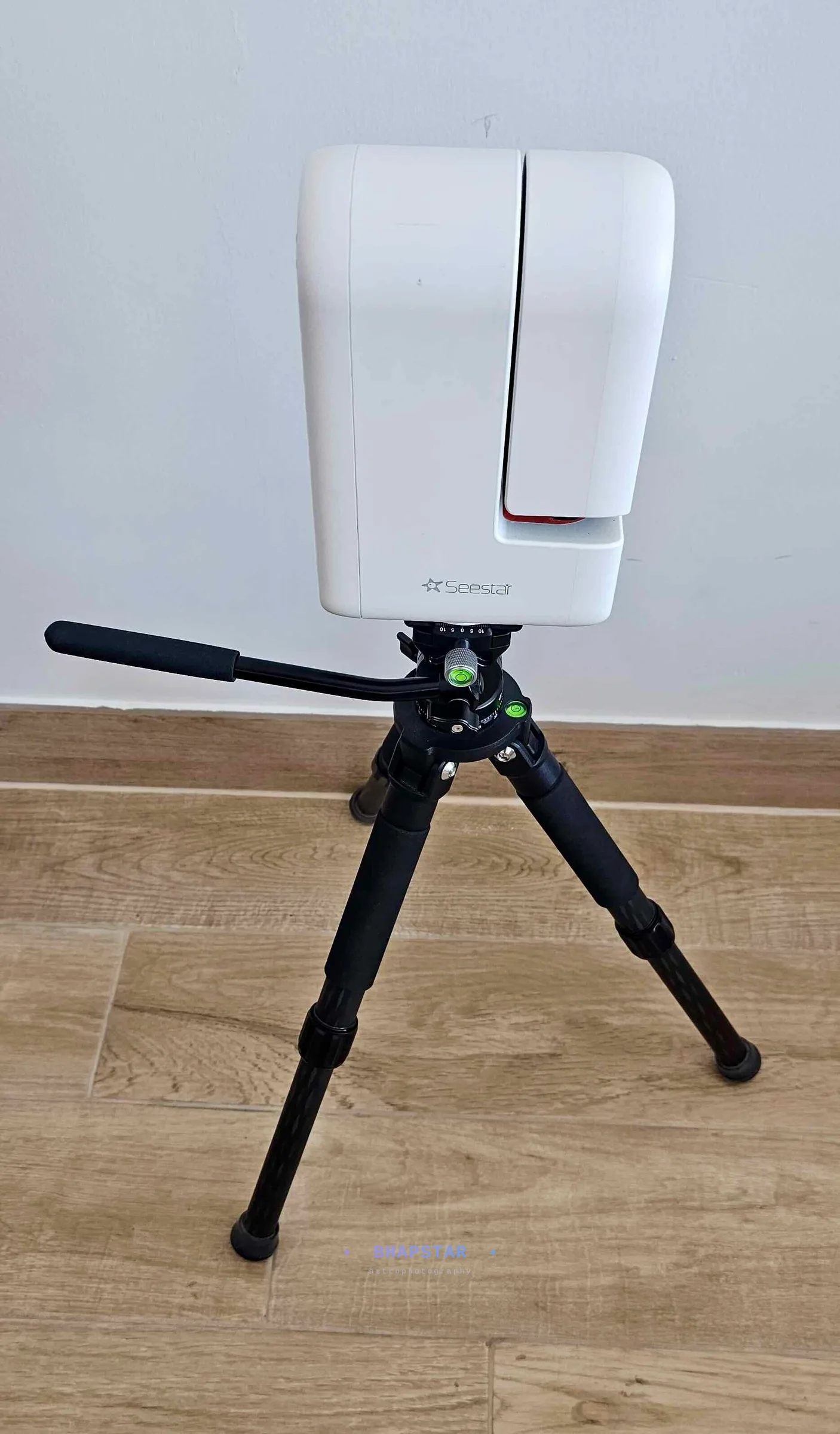
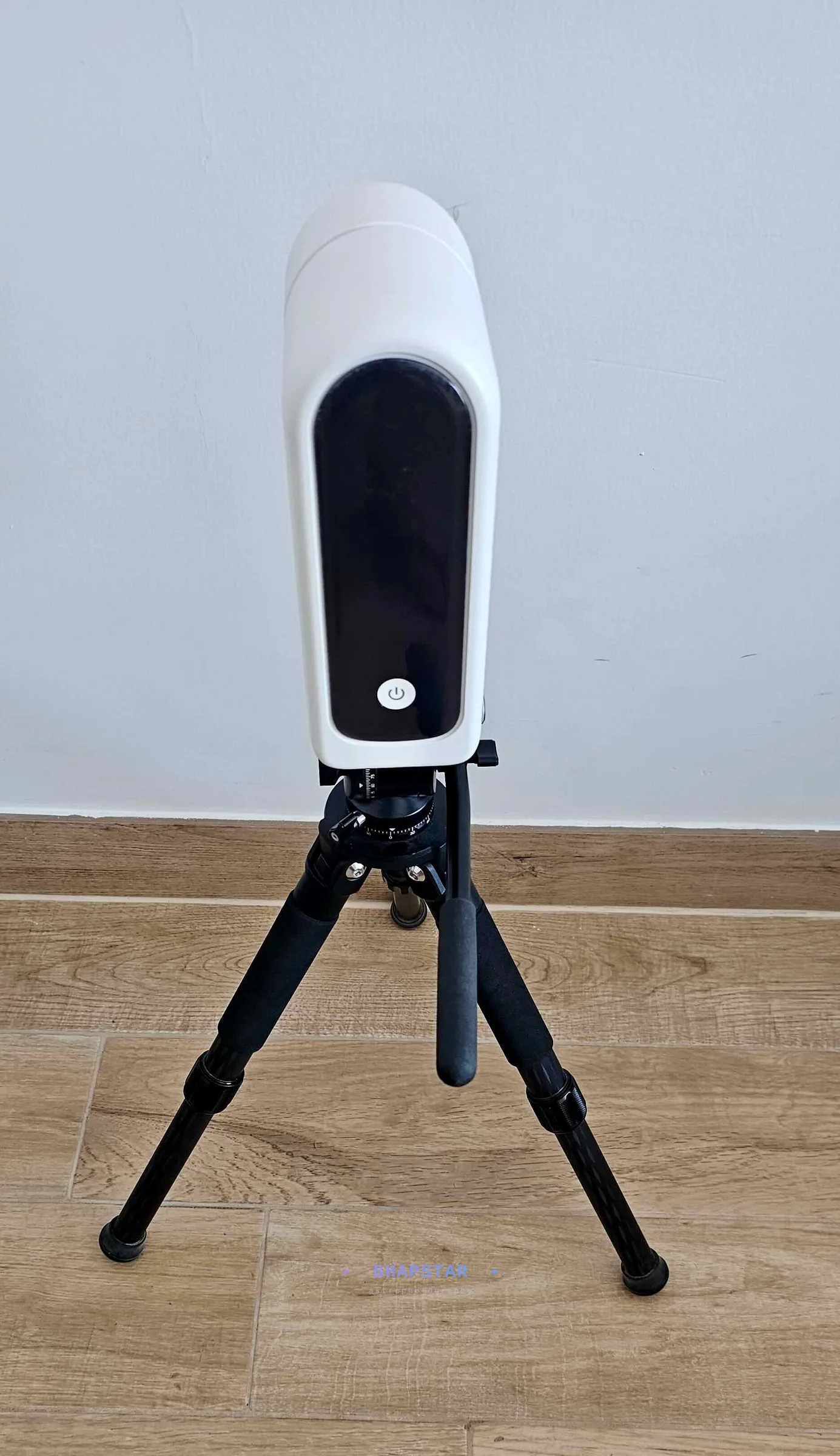
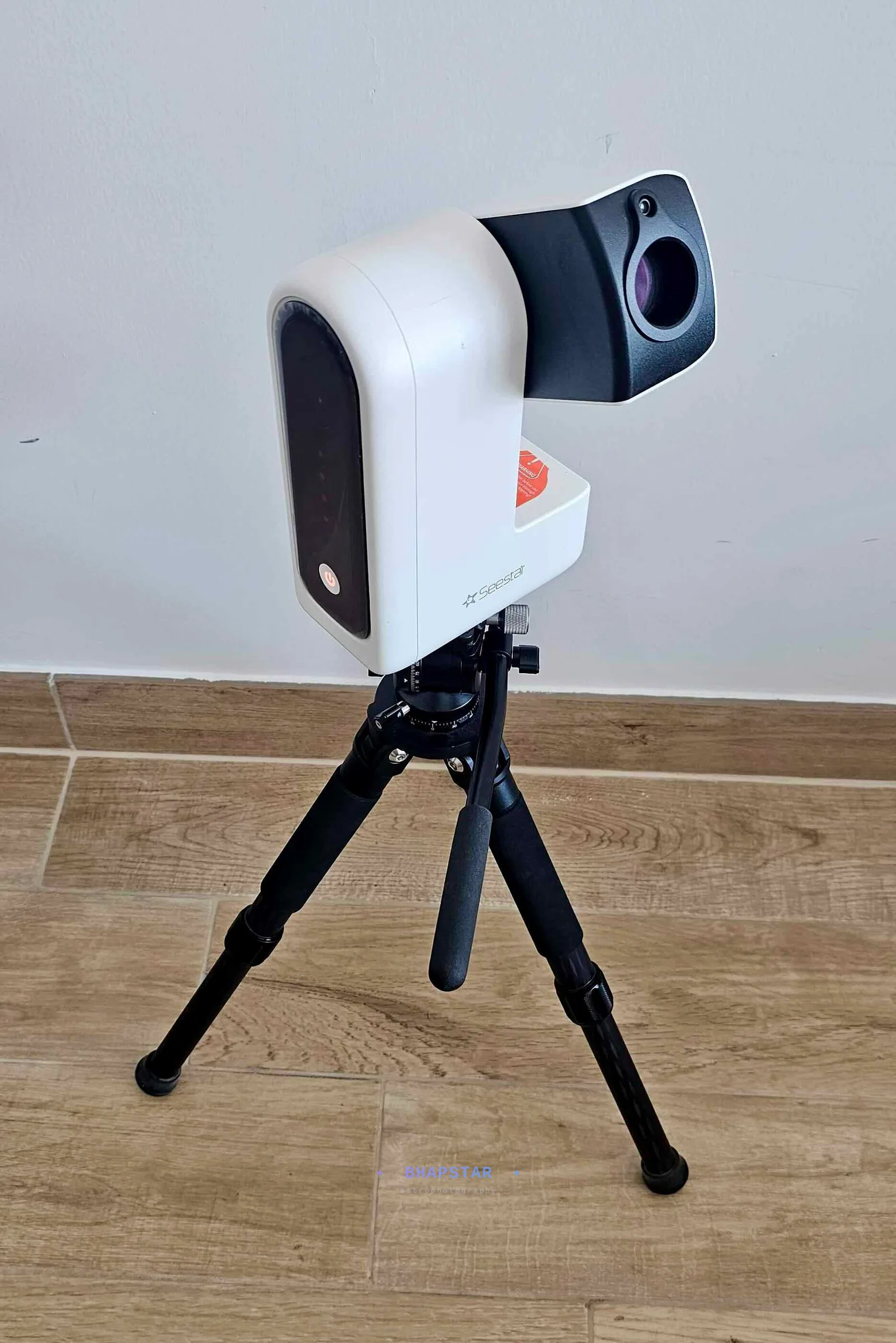
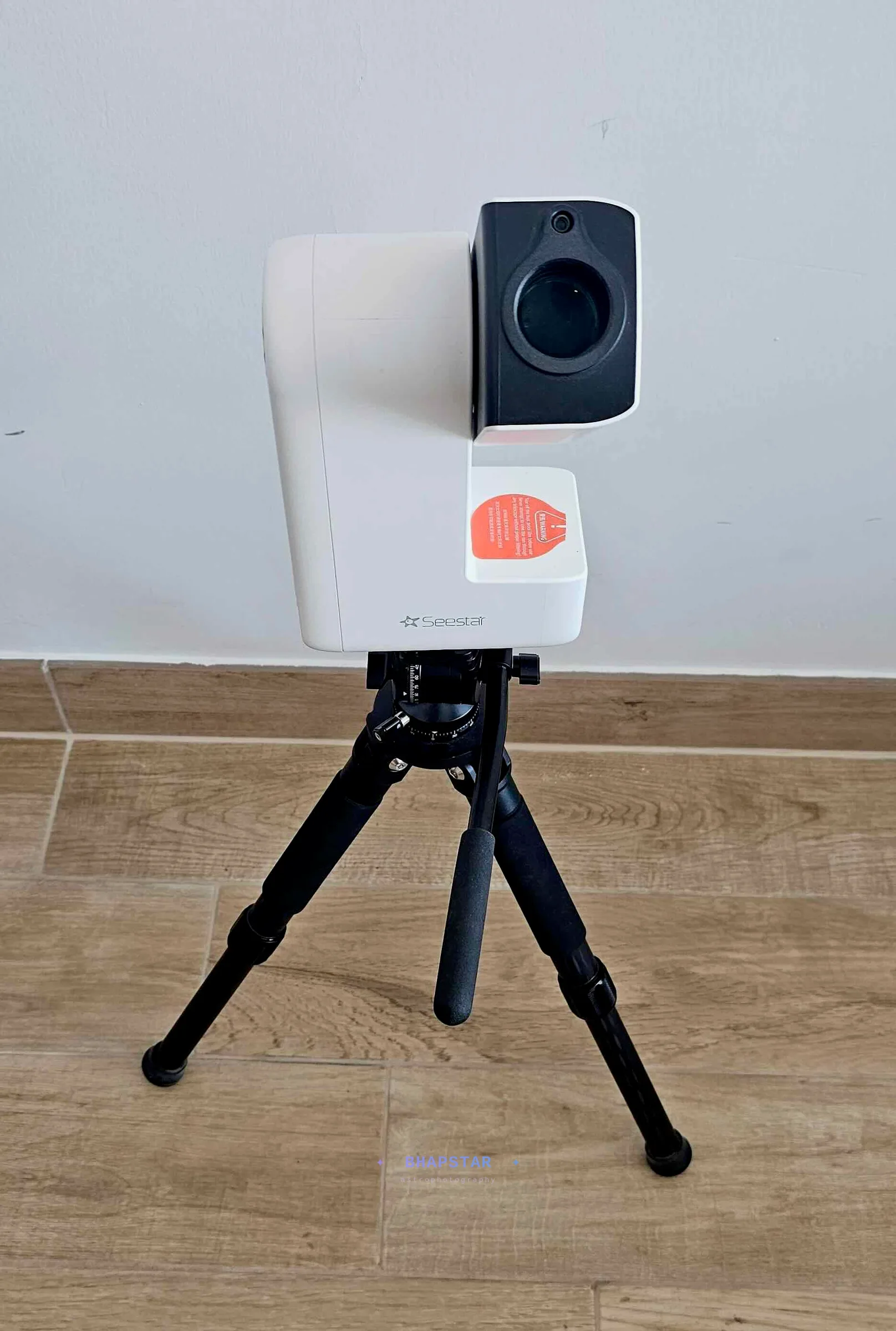
ZWO Seestar S30 Smart Telescope
A self-contained smart telescopeA sealed telescope with the mount, camera and processing built into one body, run from a phone. It finds the target, tracks it and stacks the frames on its own. that plate-solvesThe software takes a quick test frame, matches the pattern of stars in it against a catalogue, and works out exactly where the telescope is really pointing. It then nudges the mount onto the target., tracks and stacks without a laptop or a mount to set up. It is the fastest route from carrying a bag outside to watching an image build on a phone screen, which makes it the one piece of kit that gets used on nights when nothing else would.
The telescope that actually gets used
There is a gap between the setup that produces your best images and the setup that produces most of them. A full rig means a mount, tripod, cables, power, alignment and a controller. On a work night with thin cloud forecast, the honest answer is often that it is not worth it.
The S30 removes that calculation entirely. Thirty millimetres of apertureThe size of the opening the light comes through, written as an f number such as f/2.8. Confusingly, a smaller f number means a bigger opening and more light. at 150mm focal lengthHow much a lens or telescope magnifies, measured in millimetres. A small number gives a wide view of the sky, a large number a narrow, closer one., f/5, with mount, camera, filter, storage and processing inside one body. Put it down, open the app, pick a target. It plate-solves, slewsThe mount moving quickly from one part of the sky to another., tracks and stacks unaided.
What it delivers
A recognisable, shareable image of a large target in twenty minutes, which is a completely different proposition from nothing at all. It has more of the gallery to its name than its aperture suggests: Andromeda, Triangulum, the Pinwheel, the Leo Triplet and the Little Beehive are all its work, every one of them unfiltered.
The sensor is a 2.1 megapixel IMX662 and the aperture is 30mm, so detail is limited and heavy cropping is not on. Treat it as a wide-field deep-skyAnything beyond our own solar system: nebulae, galaxies and star clusters. Faint, far away, and the reason for long exposures. instrument and a fine Moon camera rather than a planetary one, where 30mm simply cannot resolve the detail regardless of software.
Who else it is for
Beginners, obviously. Less obviously, it suits people who already own a serious rig. It lowers the bar on marginal nights, and it can be handed to a family member without a briefing, which the Askar V on a harmonic mount decidedly cannot.
ZWO have replaced it with the S30 Pro, so new stock is limited. If you are choosing between the two, the aperture has not changed and the answer is less obvious than the names suggest.
Getting one now
ZWO have discontinued the model, so the used market is increasingly the route to one. That is not a bad thing: a sealed unit with no user-serviceable optics and no consumables is a lower-risk second-hand purchase than most astronomy gear. Check the battery health and that the charging port works, and there is not much else to go wrong.
Where to buy
Some links above are affiliate links. If you buy through them I may earn a small commission, at no extra cost to you. It does not affect which gear I use or recommend. As an Amazon Associate I earn from qualifying purchases.