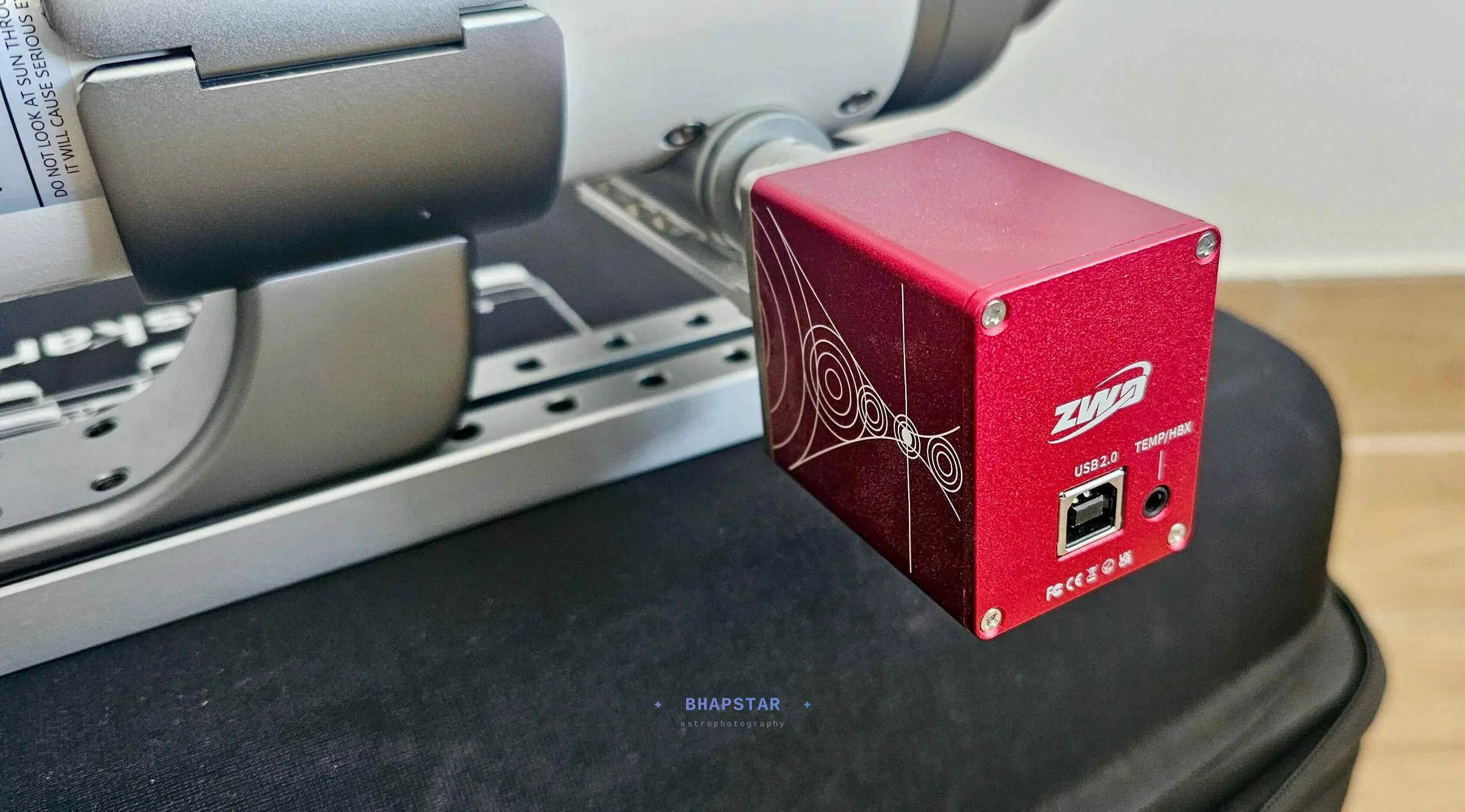
ZWO EAF Electronic Focuser
An electronic autofocuserA programmed routine through an Electronic Automatic Focuser that refocuses the telescope as the temperature drifts through the night, or at set timed intervals. that fits over the focuserThe part that slides the camera in and out until the stars are sharp. An electronic one does it with a small motor, on command. knob and is driven from the ASIAIRA small controller from ZWO that runs the mount, camera and focuser from a phone or tablet. It replaces the laptop at the telescope.. It refocuses as the temperature drifts through the night, which matters more than expected on a fast optical system where the usable focus tolerance is a few tens of micronsA thousandth of a millimetre. Sensor pixels and focus tolerances are both measured in them, and both are small enough that a few tens of microns matter..
Focus does not stay where you put it
Telescope tubes expand and contract as the temperature falls through the night, and the optical path changes with them. A tube in focus at nine in the evening is not in focus at two in the morning.
How much that matters depends on the focal ratioThe focal length divided by the width of the lens, written like f/5.8 and often called the f-number. Smaller numbers gather light faster, so you need less time on the target, but focus becomes more critical., and it matters more than most people expect. The usable focus zone scales with the square of the f-number, so an f/5 instrument tolerates roughly a quarter the error of an f/10 one. At the fast end you are working within a few tens of microns, comfortably less than a night's thermal drift.
What it does about it
The EAF replaces the focuser knob with a stepper motor driven from the ASIAIR. It runs an autofocus routine, stepping through positions and measuring star sizes to find best focus without anyone touching the telescope, and it refocuses during the session, either at intervals or when the temperature has moved by a set amount.
The second is the one that changes results. Refocusing periodically keeps the whole night's subsOne single exposure out of the many that get stacked together. Sixty subs of one minute each make one hour of data. usable instead of accumulating a drift that quietly ruins the last third of them. It also removes a source of vibration, since focusing by hand means touching the telescope and waiting for it to settle, several times a night.
Fitting and pairing
Installation means removing a focuser knob and fitting the motor bracket, so it is worth confirming the bracket suits your focuser before ordering, as ZWO supply different fittings. Checking and configuring backlashThe small amount of free play in a gear or a focuser before it starts moving. Measuring it once lets the software allow for it. after installation makes the autofocus routine noticeably better behaved.
It pairs naturally with the ASI585MC Air, which provides the ASIAIR side of the arrangement, and it matters most on the faster Askar V configurations. For short sessions on slow optics it is a convenience rather than a necessity.
Where it sits in the rest of the setup is covered in the rig tour, and the autofocus routine it runs, the V-curvePlot how big the stars look against where the focuser is, and you get a V shape. The bottom of the V is perfect focus. and the repeat-on-temperature-drop setting, is described in the ASIAir write-up.
Getting one to the UAE
Mine came from AliExpress and arrived in Dubai without trouble. Since the bracket has to match your focuser, this is one to confirm before ordering rather than after, because returning a small mechanical part internationally costs more in effort than the part is worth.
Where to buy
Some links above are affiliate links. If you buy through them I may earn a small commission, at no extra cost to you. It does not affect which gear I use or recommend. As an Amazon Associate I earn from qualifying purchases.