The Eagle Nebula (M16)
Home to the Pillars of Creation, the Eagle Nebula is one of the most iconic targets in all of astrophotography, a stellar nursery where new stars are being born inside towering columns of gas and dust.
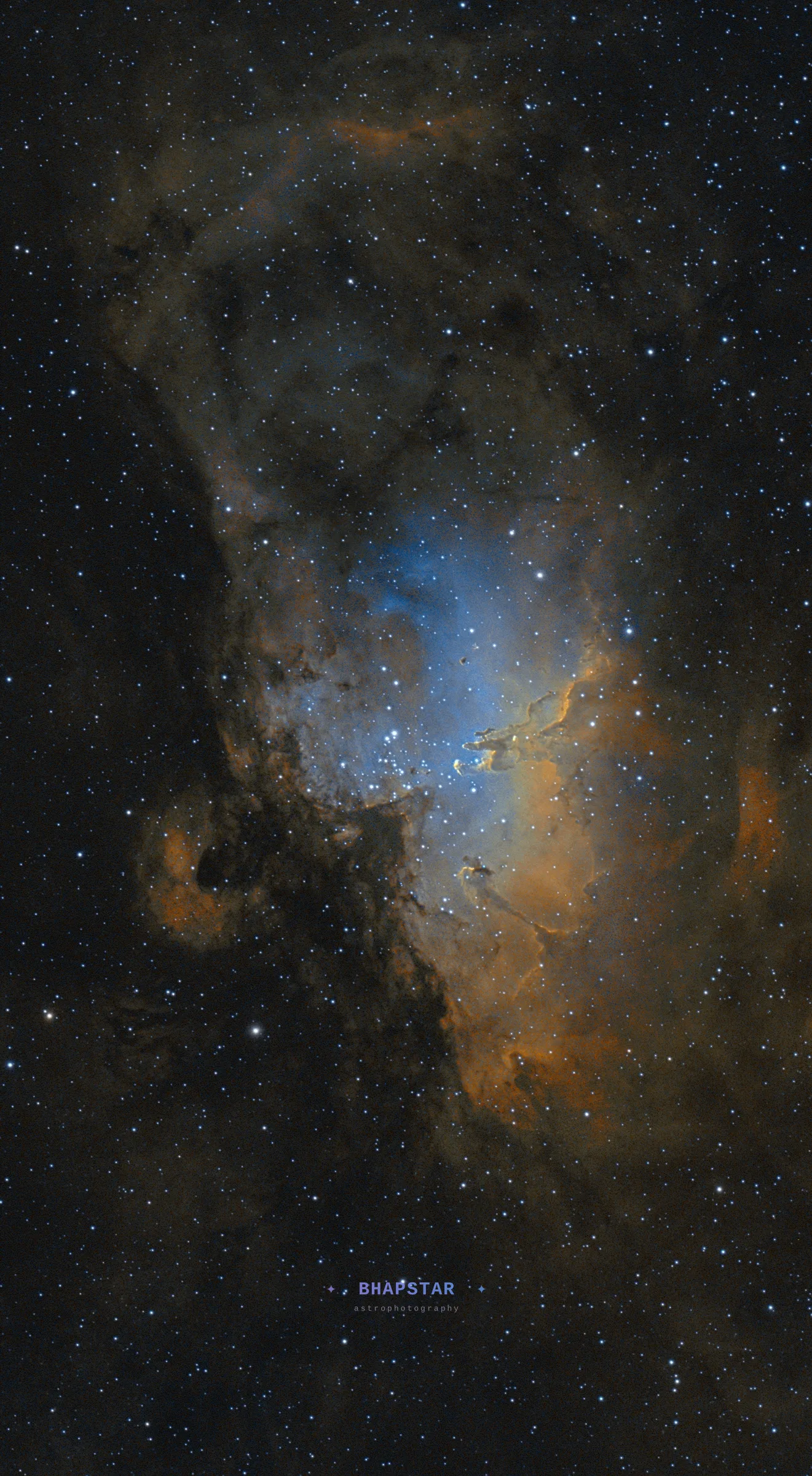
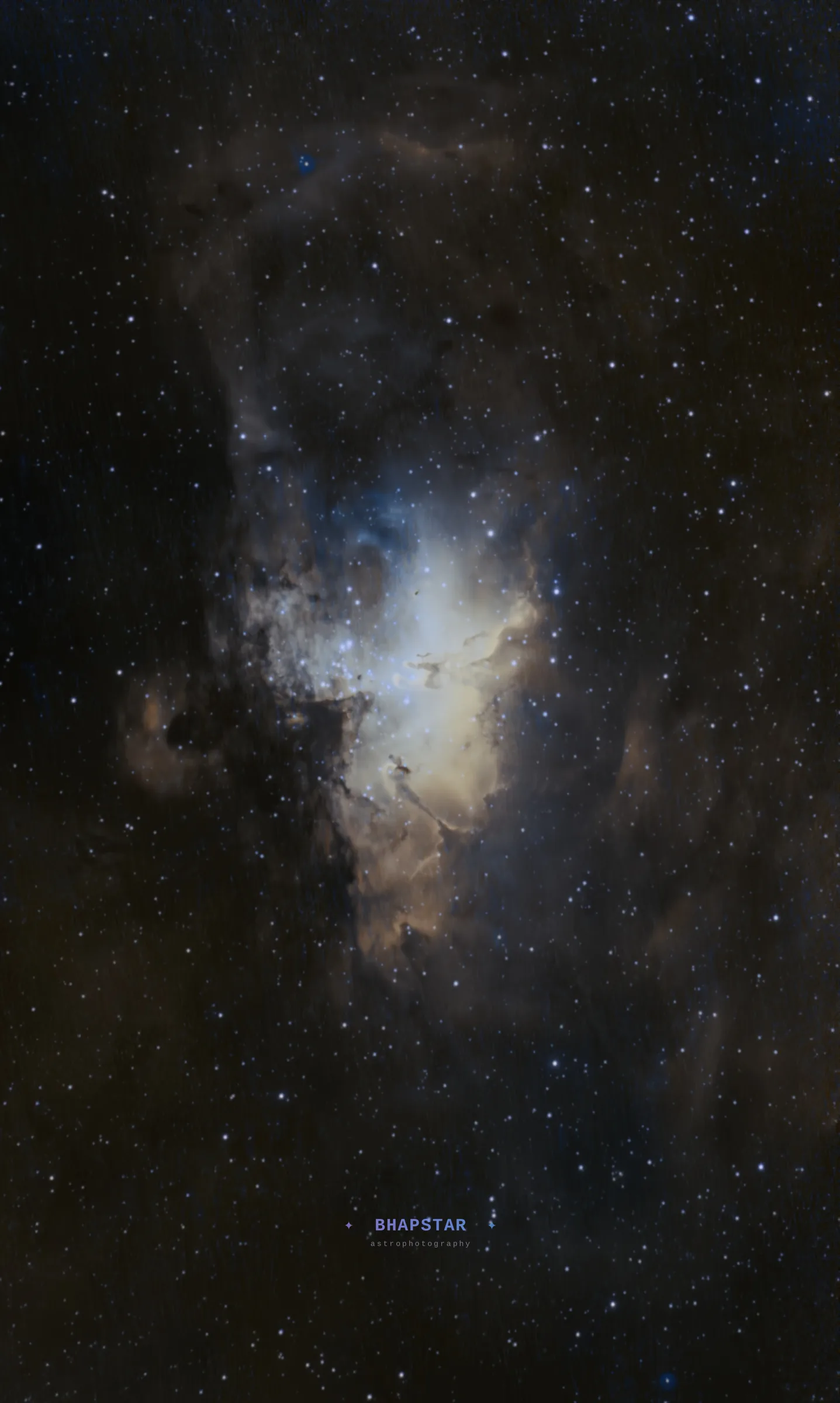
Messier 16, the Eagle Nebula, lies roughly 7,000 light-years away in the constellation Serpens. It was the subject of one of the most famous astronomical images ever taken, Hubble's 1995 photograph of the Pillars of Creation, three enormous columns of molecular gas and dust rising from the nebula's interior, slowly being sculpted by the radiation of newly formed stars.
This was a target I returned to more than once. Move the slider on the picture above to see my first attempt at it. Better equipment, more hours on target and a lot more practice with the processing account for the difference, and watching the same object give up more detail as your technique develops is one of the more satisfying things about this hobby.
The Pillars themselves sit near the centre of the nebula and require good seeing and sufficient focal lengthHow much a lens or telescope magnifies, measured in millimetres. A small number gives a wide view of the sky, a large number a narrow, closer one. to resolve properly. In narrowbandA filter that only lets through the few exact colours that glowing gas clouds give off, and blocks nearly everything else. Streetlight is mostly blocked, the nebula is not., the hydrogen-alphaThe deep red light given off by hydrogen, at a wavelength of 656 nanometres. It is the single most common thing being photographed in a glowing gas cloud. and OIIIThe blue-green light given off by oxygen in a glowing gas cloud. It is one of the two colours most nebula filters are built around. contrast beautifully - the pillars appear as dark silhouettes against the glowing gas behind them.