Eastern Veil Nebula (NGC 6992)
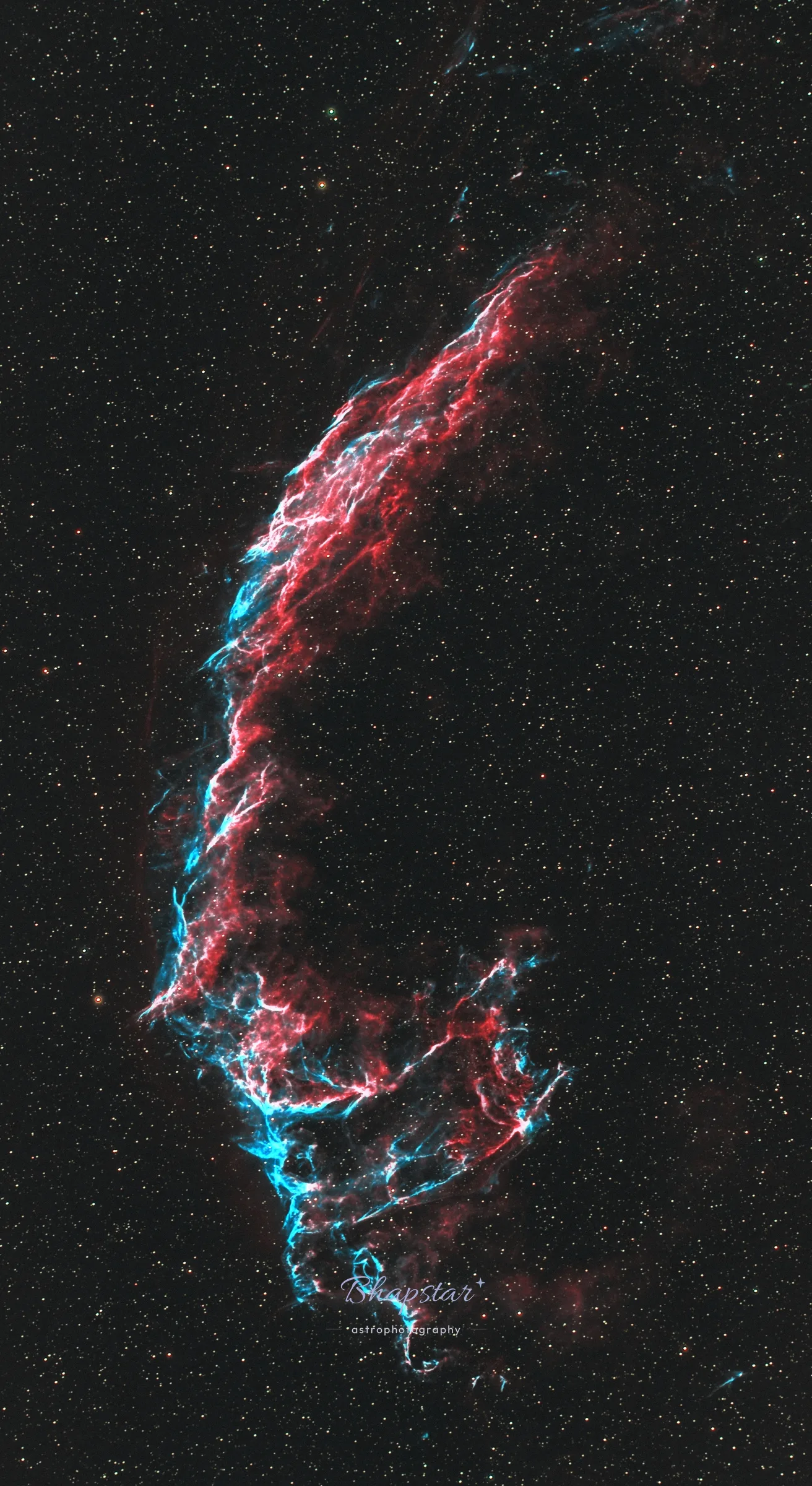
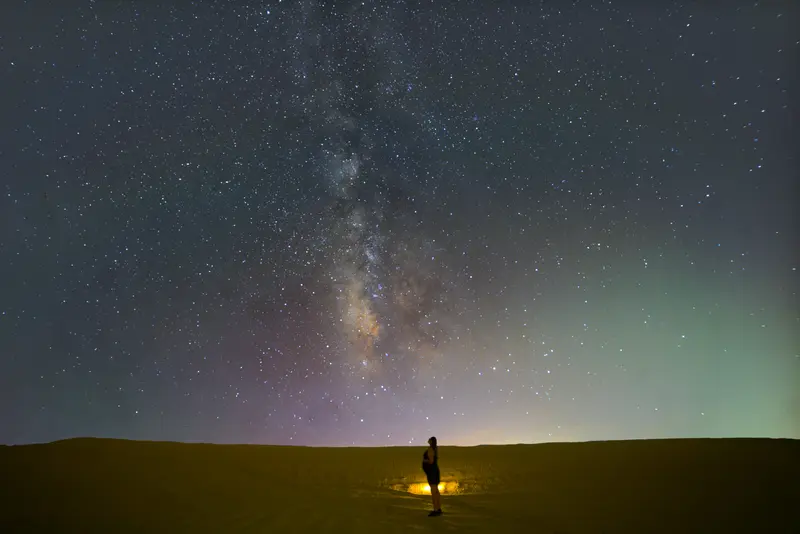
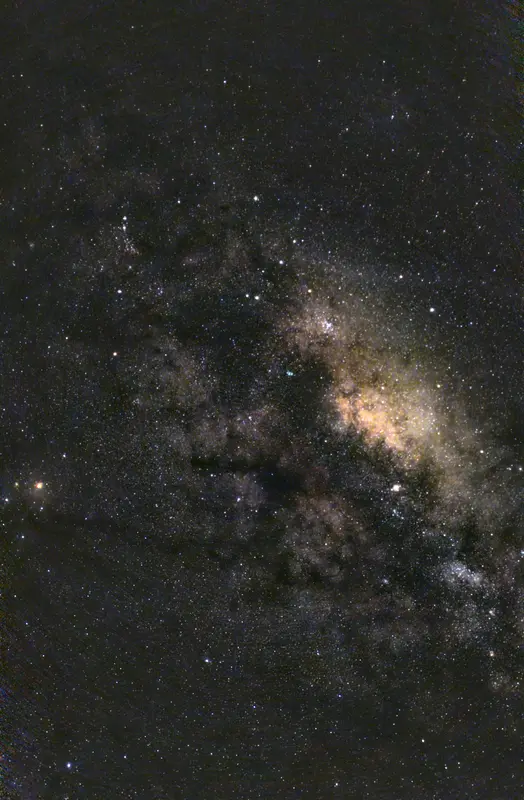
The Veil is what is left of a star that exploded somewhere between 10,000 and 20,000 years ago, about 2,400 light-years away in Cygnus. The whole remnant covers around six times the width of the full moon, far too large for one frame at this focal lengthHow much a lens or telescope magnifies, measured in millimetres. A small number gives a wide view of the sky, a large number a narrow, closer one., so it is usually shot in pieces. This is NGC 6992, the eastern arc, and the brightest section of it.
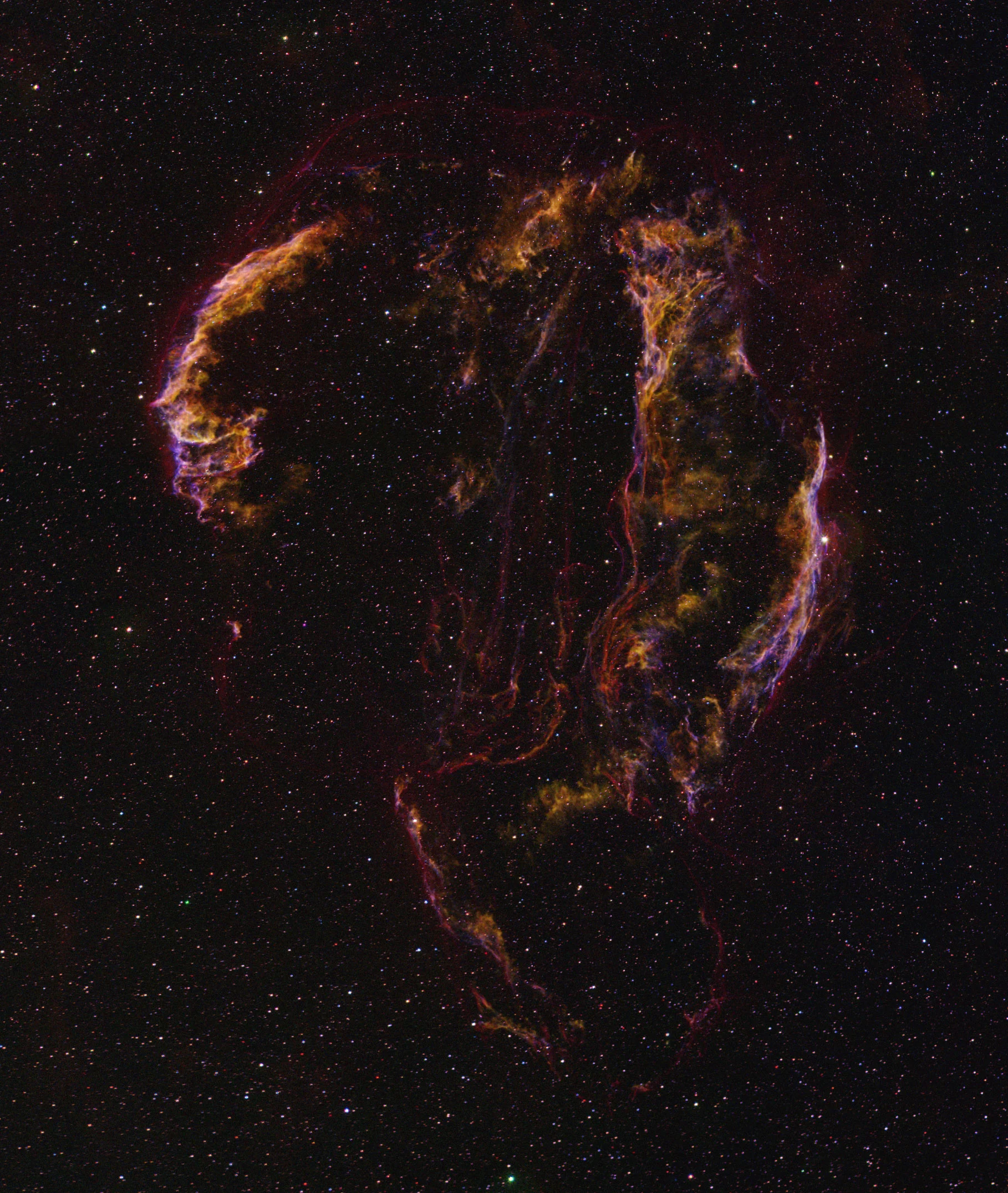
The filamentsA thin bright thread running through a nebula. Often it is not a thread at all but a sheet of gas seen edge-on: looking along the fold stacks the same faint material over a much longer path, so it brightens into a line while the face-on parts stay invisible. are not clouds. They are the shock front, the boundary where the expanding blast wave is slamming into the interstellar gas that was already there. It looks like fine thread because the shell is being seen edge-on: where the line of sight runs along a fold in the shell rather than through it, the same thin sheet of glowing gas is stackedCombining many frames of the same patch of sky into one. The random grain is different in every frame so it averages away, while the real detail is in the same place every time and stays. up over a much longer path, and it brightens into a filament. The dark gaps between them are not empty, they are simply places where the sheet is face-on and too faint to register.
The two colours are two different gases doing two different things. The red is hydrogen, glowing where the shock has swept up and heated the gas. The teal is oxygen, and it traces the hottest, fastest part of the front, which is why it sits consistently on the leading outer edge with the hydrogen trailing behind it. That separation is real structure rather than a processing choice, and it is the reason this object rewards a dual narrowbandOne filter with two windows open at the same time, usually the red light from hydrogen and the blue-green light from oxygen. It suits a colour camera, which records both at once. filter more than almost anything else in the sky.
A 3nm filter matters here. The Veil sits against a rich section of the Milky Way, so the field is crowded with stars competing with a target that is genuinely faint. Cutting the passbandThe window of colours a filter lets through. A narrow passband blocks more streetlight, but leaves less margin if anything shifts. hard darkens the background and holds the stars down while leaving the two emission linesOne exact colour that a glowing gas gives off. Hydrogen produces a strong red one, oxygen a blue-green one, and filters are built around their positions. untouched, which is what lets the filaments separate from everything behind them.