The Lobster Nebula (NGC 6357)
A vast star-forming complex in Scorpius, the Lobster Nebula is carved into shape by Pismis 24 - a cluster of extraordinarily massive young stars whose radiation is steadily hollowing out the gas that made them.
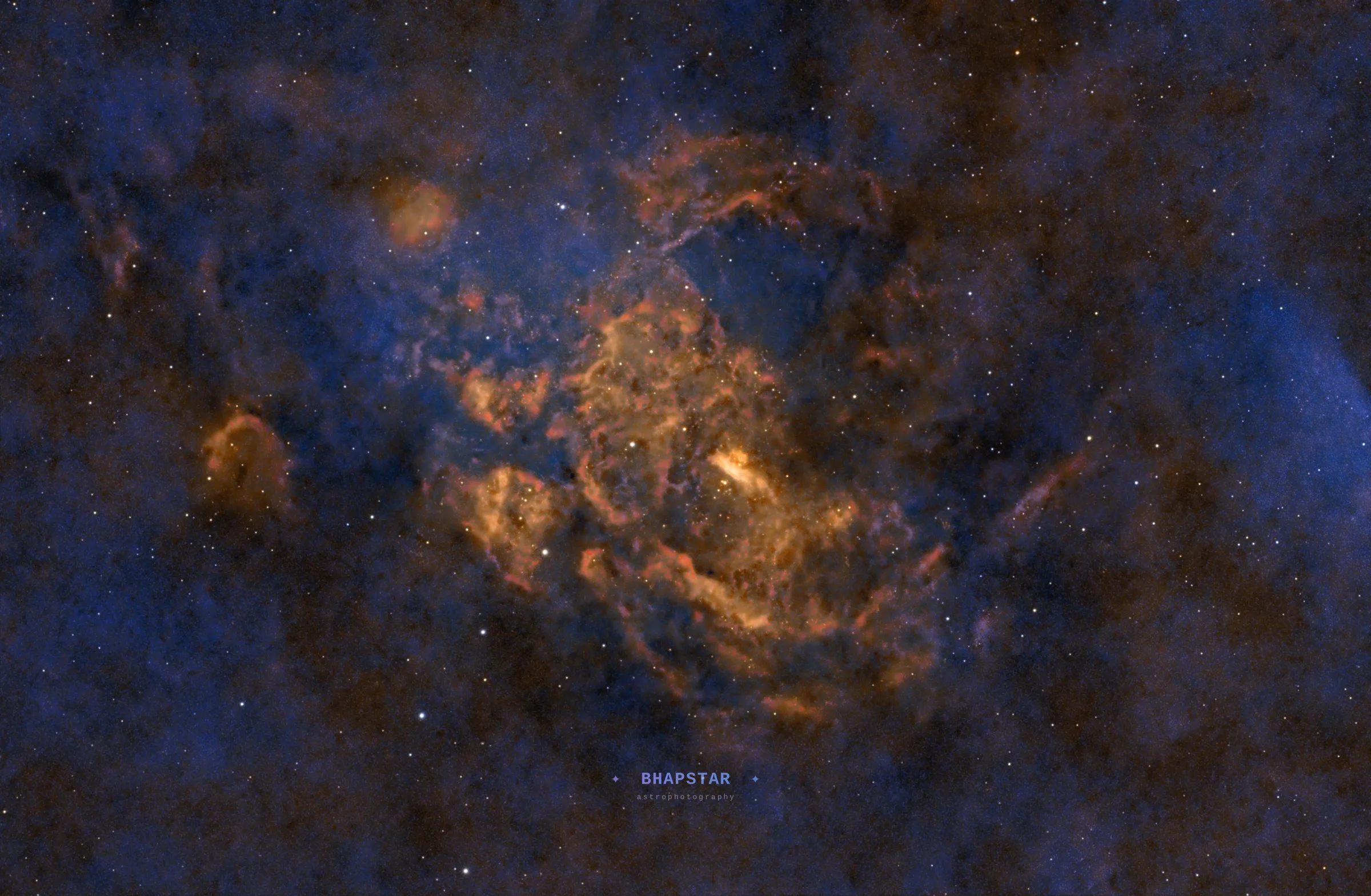
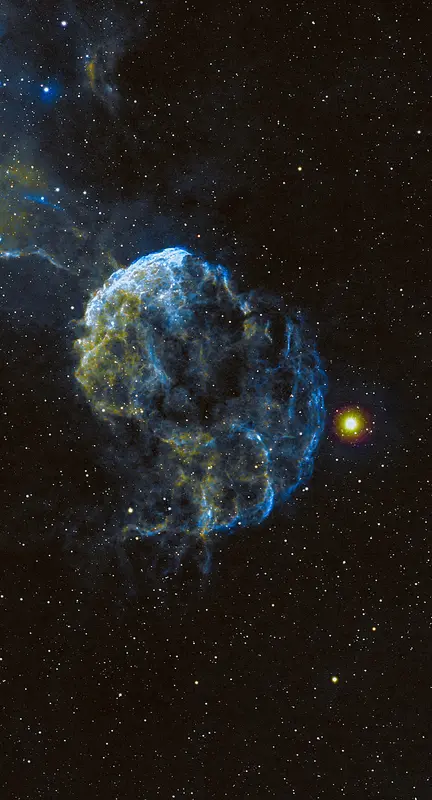
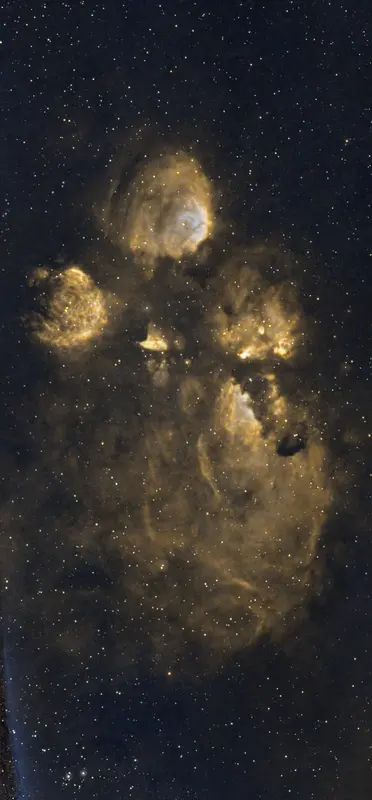
NGC 6357 lies roughly 5,500 light-years away in Scorpius, immediately north of the Cat's Paw Nebula - the two sit close enough that at short focal lengths they can be framed together. It is sometimes also called the War and Peace Nebula, a name earned from its appearance in infrared surveys.
What drives the nebula is the open cluster Pismis 24, buried near its centre. It contains several of the most massive stars known in the Milky Way, including Pismis 24-1, long thought to be a single star of well over a hundred solar masses before higher-resolution imaging resolved it into multiple components. Their combined ultraviolet output is ionising the surrounding hydrogen and blowing enormous cavities and pillars into the cloud - the same sculpting process visible in the Eagle Nebula, but on a larger and more violent scale.
This one was shot from home under BortleA scale from 1 to 9 for how dark a sky is. Class 1 is a truly dark desert sky and class 9 is the middle of a bright city. 8 skies, which makes a narrow dual-band filter essential rather than optional. At 3nm the light pollutionArtificial light from streets and buildings that scatters in the air and brightens the whole night sky, hiding everything faint. simply disappears and the hydrogen-alphaThe deep red light given off by hydrogen, at a wavelength of 656 nanometres. It is the single most common thing being photographed in a glowing gas cloud. structure comes through cleanly even at four hours. The bigger constraint from this latitude is altitudeHow high something is above the horizon, measured in degrees. Zero is the horizon and 90 is straight overhead. The higher it is, the less air you are looking through. - at around -34 degrees declinationThe sky's version of latitude, measured in degrees north or south of the celestial equator. Straight above the North Pole is +90 degrees. the nebula never climbs far, so the usable window each night is short and you are always shooting through more atmosphere than you would like. Plan for a clean southern horizon and take the transit hours.